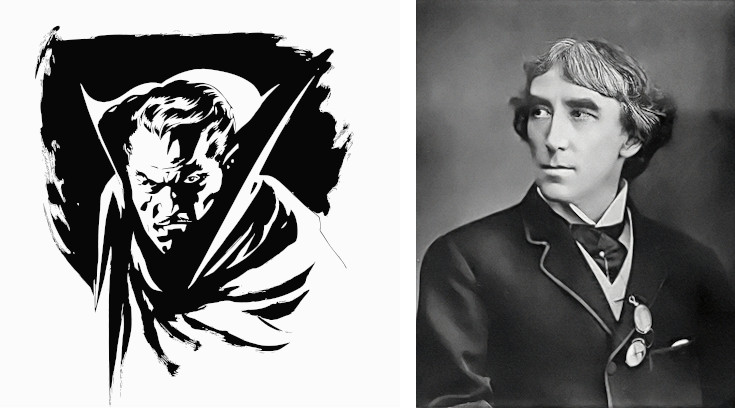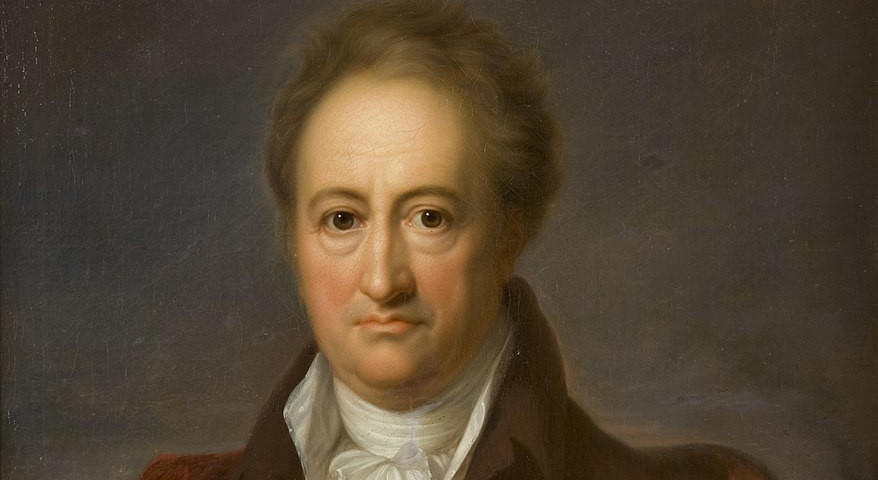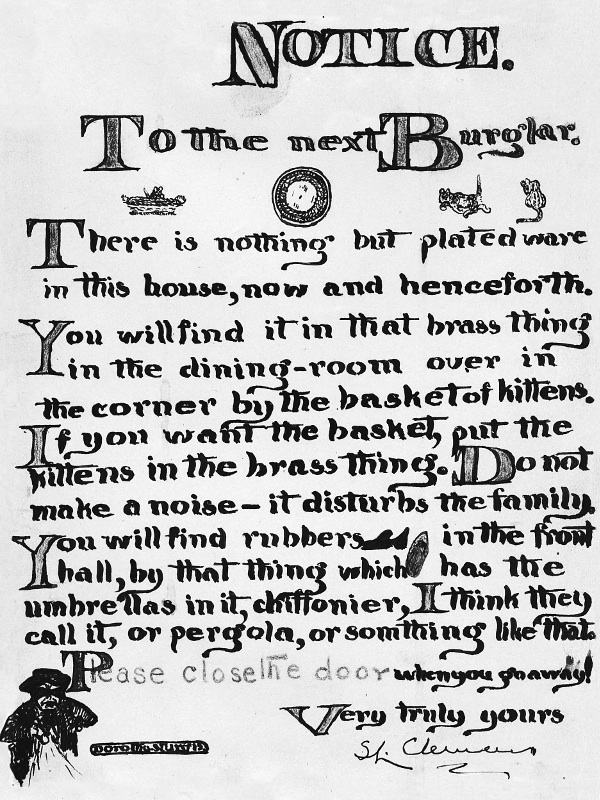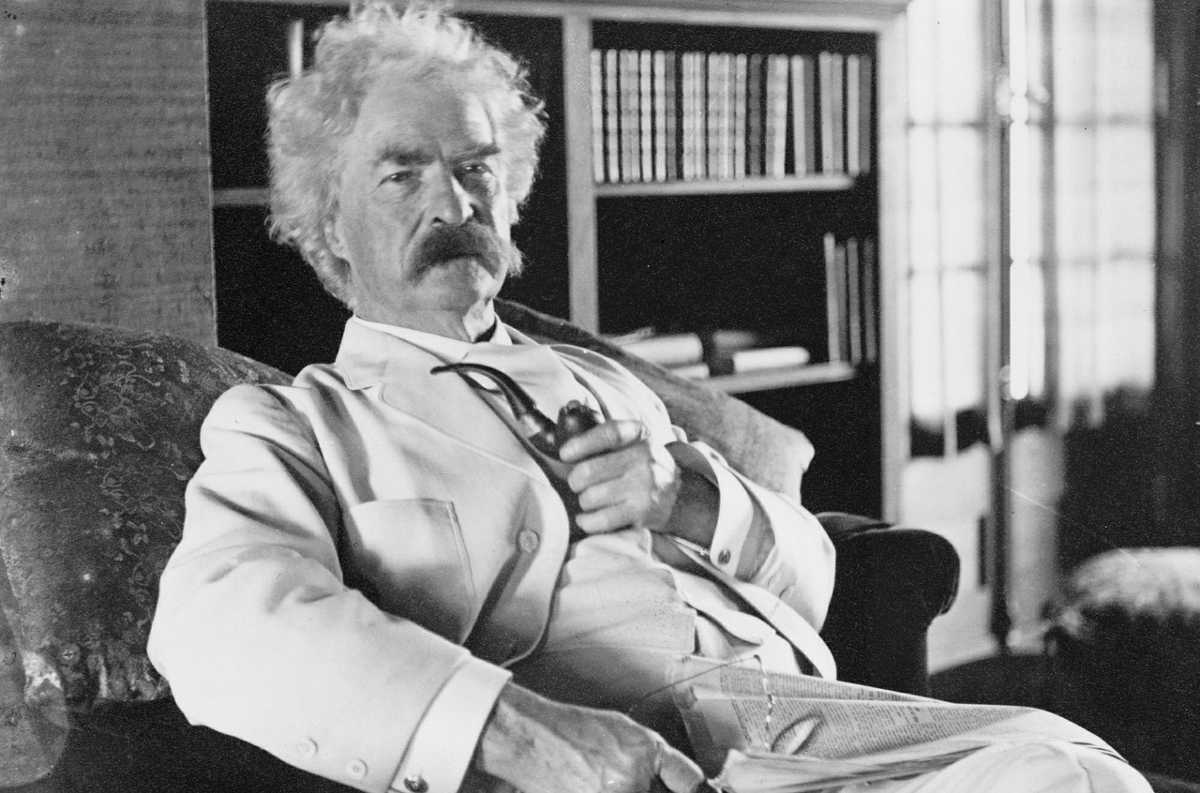
The second-bloodiest riot in the history of New York was touched off by a dispute between two Shakespearean actors. Their supporters started a brawl that killed as many as 30 people and changed the institution of theater in American society. In this week’s episode of the Futility Closet podcast we’ll tell the story of the Astor Place riot, “one of the strangest episodes in dramatic history.”
We’ll also fertilize a forest and puzzle over some left-handed light bulbs.
Submitted by Joseph Hall for Life magazine’s 1915 short story contest:
They were two women, one young, radiant, the other gently, beautifully old.
‘But, Auntie, it’s such fun.’
The older rose.
‘Wait.’
In a moment she had returned. Two faded yellow letters lay upon the young girl’s lap.
‘Read them.’
Wonderingly the girl obeyed. The first read:
Dearest:
I leave you to John. It is plain you care for him. I love you. Just now it seems that life without you is impossible. But I can no longer doubt. If you cared, there would be no doubt. John is my friend. I would rather see you his than any other’s, since you cannot be mine. God bless you.
Will.
The other:
Beloved:
I am leaving you to the better man. For me there can never be another love. But it is best — it is the right thing — and I am, yes, I am glad that it is Will you love instead of me. You cannot be anything but happy with him. With me — but that is a dream I must learn to forget.
Dispensationalist pastor Clarence Larkin illustrated his books with intricate charts interpreting prophecy and explaining God’s action in history.
“[T]he charts had to be thought out and developed under the direction and guidance of the Holy Spirit,” he wrote in Dispensational Truth (1920). “In this the Holy Spirit did not confuse the Author by suggesting all the charts at one time. When one was completed another was suggested. And upon more than one occasion when a problem arose the answer was given in the night or at awakening in the morning.”
Did Ophelia ask Hamlet to bed?
Was Gertrude incestuously wed?
Is there anything certain?
By the fall of the curtain
Almost everyone’s certainly dead.
— A. Cinna
Once a raven on Pluto’s dark shore
Brought the singular news: “Nevermore.”
‘Twas of useless avail
To ask further detail,
His reply was the same as before.
— Anthony Euwer
There once was a fellow called Hyde,
Whose twin self he couldn’t abide;
But Jekyll, the Devil,
Dragged Hyde to his level,
“Inside job,” cried Hyde, as he died.
— E.J. Jackson
When Ireland was bloody and leaderless,
The tedious, garrulous Daedalus —
Having failed both as priest
And as Glorious Beast —
Sailed away to write books that were readerless.
Lewis Carroll’s 1885 puzzle book A Tangled Tale bears an anonymous dedication:
Beloved Pupil! Tamed by thee,
Addish-, Subtrac-, Multiplica-tion,
Division, Fractions, Rule of Three,
Attest thy deft manipulation!
Then onward! Let the voice of Fame
From Age to Age repeat thy story,
Till thou has won thyself a name
Exceeding even Euclid's glory!
He was thinking of Edith Rix, a child-friend who went on to study mathematics at Cambridge. She might have divined without asking that the dedication was intended for her. How?
Science fiction writer Harlan Ellison typed more than 1,700 works using a single finger of each hand. In 1999 Mike Keith set out to learn which words would be easiest for him to type. “Easy” means that successive letters are typed by alternate hands and that the hands travel as little as possible. (See the article for some other technicalities.)
Here are the easiest words of 4 to 13 letters; the score in parenthesis is the total linear distance traveled by the fingers, normalized by dividing by the length of the word (lower is better):
Oscar Wilde, among his various stories told here of which he was always the aesthetic hero, related that once while on a visit to an English country house he was much annoyed by the pronounced Philistinism of a certain fellow guest, who loudly stated that all artistic employment was a melancholy waste of time.
‘Well, Mr. Wilde,’ said Oscar’s bugbear one day at lunch, ‘and pray how have you been passing your morning?’ ‘Oh! I have been immensely busy,’ said Oscar with great gravity. ‘I have spent my whole time over the proof sheets of my book of poems.’ The Philistine with a growl inquired the result of that.
‘Well, it was very important,’ said Oscar. ‘I took out a comma.’ ‘Indeed,’ returned the enemy of literature, ‘is that all you did?’ Oscar, with a sweet smile, said, ‘By no means; on mature reflection I put back the comma.’ This was too much for the Philistine, who took the next train to London.