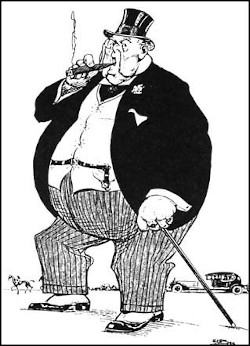
“It tires me to talk to rich men. You expect a man of millions, the head of a great industry, to be a man worth hearing; but as a rule they don’t know anything outside their own businesses.” — Theodore Roosevelt

“It tires me to talk to rich men. You expect a man of millions, the head of a great industry, to be a man worth hearing; but as a rule they don’t know anything outside their own businesses.” — Theodore Roosevelt
English philanthropist Lady Jane Stanley financed footpaths through her native Knutsford with an odd proviso:
For some unknown reason Lady Jane disliked to see men and women linked together, i.e. walking arm in arm; and in her donations for the pavement of the town, provided that a single flag in breadth should be the limit of her generosity,– but she did not specify how broad the single flag was to be, and I fear her wishes are evaded, and the disapproved linking together often indulged in: the chief security for her order being observed is the disagreeable fact that in many places the streets and consequently the raised pavements are too narrow to allow of more than a very slender foot-path, so that if the lasses occupy the flags, the swains must either walk behind, or pick their way in the channel.
Never married, she composed her own epitaph:
A maid I lived,– a maid I died,–
I never was asked,– and never denied.
(From Henry Green, Knutsford, Its Traditions and History, 1859.)
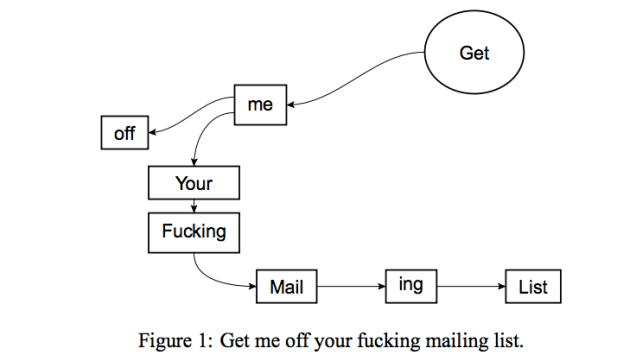
In 2014, after receiving dozens of unsolicited emails from the International Journal of Advanced Computer Technology, scientists David Mazières and Eddie Kohler submitted a paper titled “Get Me Off Your Fucking Mailing List.”
To Mazières’ surprise, “It was accepted for publication. I pretty much fell off my chair.”
The acceptance bolsters the authors’ contention that IJACT is a predatory journal, an indiscriminate but superficially scholarly publication that subsists on editorial fees. Mazières said, “They told me to add some more recent references and do a bit of reformatting. But otherwise they said its suitability for the journal was excellent.”
He didn’t pursue it. And, at least as of 2014, “They still haven’t taken me off their mailing list.”
In 1997, Berkeley psychology student Arthur Aron and his colleagues refined a list of 36 questions for “creating closeness.” “One key pattern associated with the development of a close relationship among peers is sustained, escalating, reciprocal, personal self-disclosure,” Aron wrote. “The core of the method we developed was to structure such self-disclosure between strangers.”
Each pair of subjects took turns asking each other questions from this list, in order:
Most of the pairs of strangers left the session with highly positive feelings for each other: “[I]mmediately after about 45 min of interaction, this relationship is rated as closer than the closest relationship in the lives of 30% of similar students” (though, to be sure, “it seems unlikely that the procedure produces loyalty, dependence, commitment, or other relationship aspects that might take longer to develop”).
(Arthur Aron et al., “The Experimental Generation of Interpersonal Closeness: A Procedure and Some Preliminary Findings,” Personality and Social Psychology Bulletin 23:4 [1997], 363-377.)
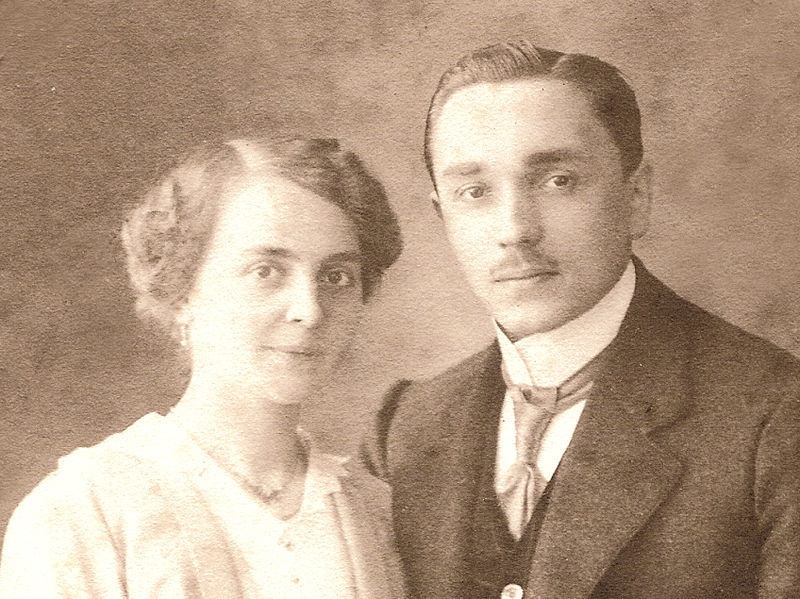
In the 1930s, German civil servant Friedrich Kellner was outraged by the increasing brutality of the Nazi party and the complicity of his fellow citizens. He began to keep a secret diary to record the crimes of the Third Reich and his condemnations of his countrymen. In this week’s episode of the Futility Closet podcast, we’ll tell the story of Friedrich’s diary and his outspoken warnings to future generations.
We’ll also ponder the problem with tardigrades and puzzle over a seemingly foolish choice.

In 1986, 89-year-old viewer Jerry Pratt showed up at Minneapolis’s WCCO-TV and told local newsman Don Shelby that he didn’t know how to tie his necktie straight.
“He’s my favorite anchor, and I got sick and tired of looking at the big knot in his tie every night,” Pratt said. “One of the first things people look at is a man’s tie.”
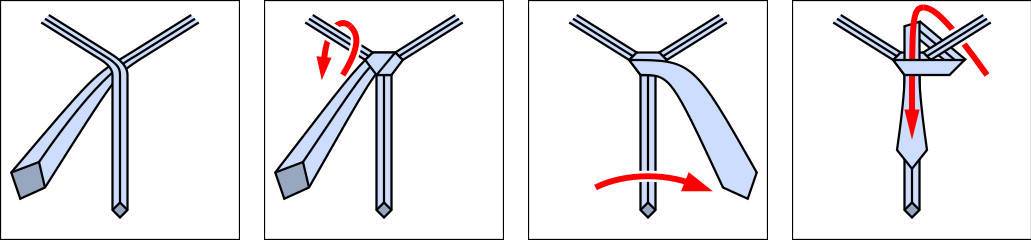
So he showed him something new, the “Pratt knot,” “the first new knot for men in over 50 years.” The Neckwear Association of America confirmed that it didn’t appear in Getting Knotted: 188 Knots for Necks, the trade association’s reference guide.
Some questioned whether it’s entirely original, calling it either a reverse half-Windsor or a variation on a knot called the Nicky, with the narrow end of the tie reversed, the seams and label facing out.
Pratt said he’d invented it on his own 30 years earlier. “I didn’t call it anything,” he said. “I just turned the tie inside out, and there it was.”
“At least something will carry on the family name.”
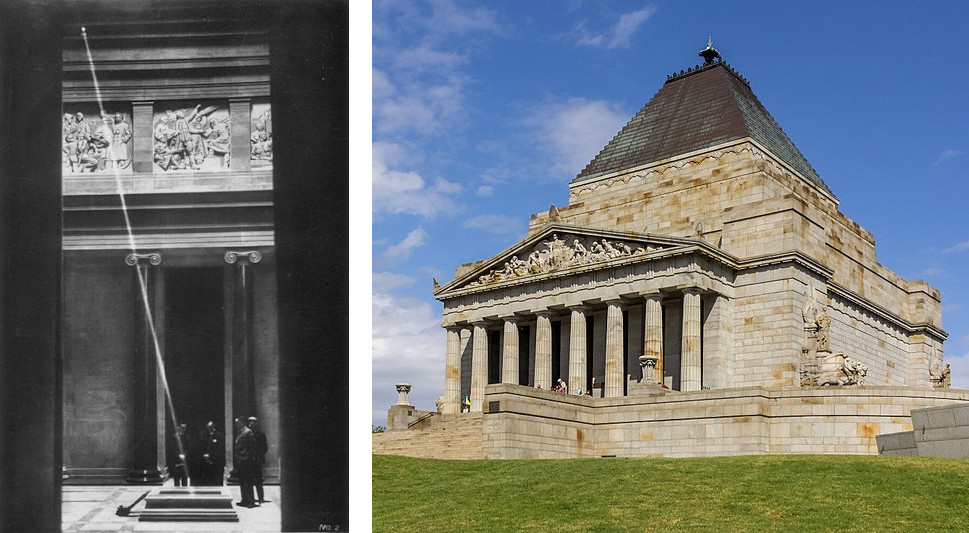
The Shrine of Remembrance in Melbourne, built to honor the men and women of Victoria who served in World War I, contains a marble stone engraved with the words Greater love hath no man (from John 15:13, “Greater love hath no man than this, that a man lay down his life for his friends”).
The shrine is constructed so that once a year, at 11 a.m. on Nov. 11, a ray of sunlight will shine through an aperture in the roof to illuminate the word love.
Arizona’s Anthem Veterans Memorial has a related design.
11/14/2020 UPDATE: An interesting addendum: The introduction of daylight saving in 1971 led designers to introduce a system of mirrors to ensure the right timing. Thanks to everyone who wrote in about this.
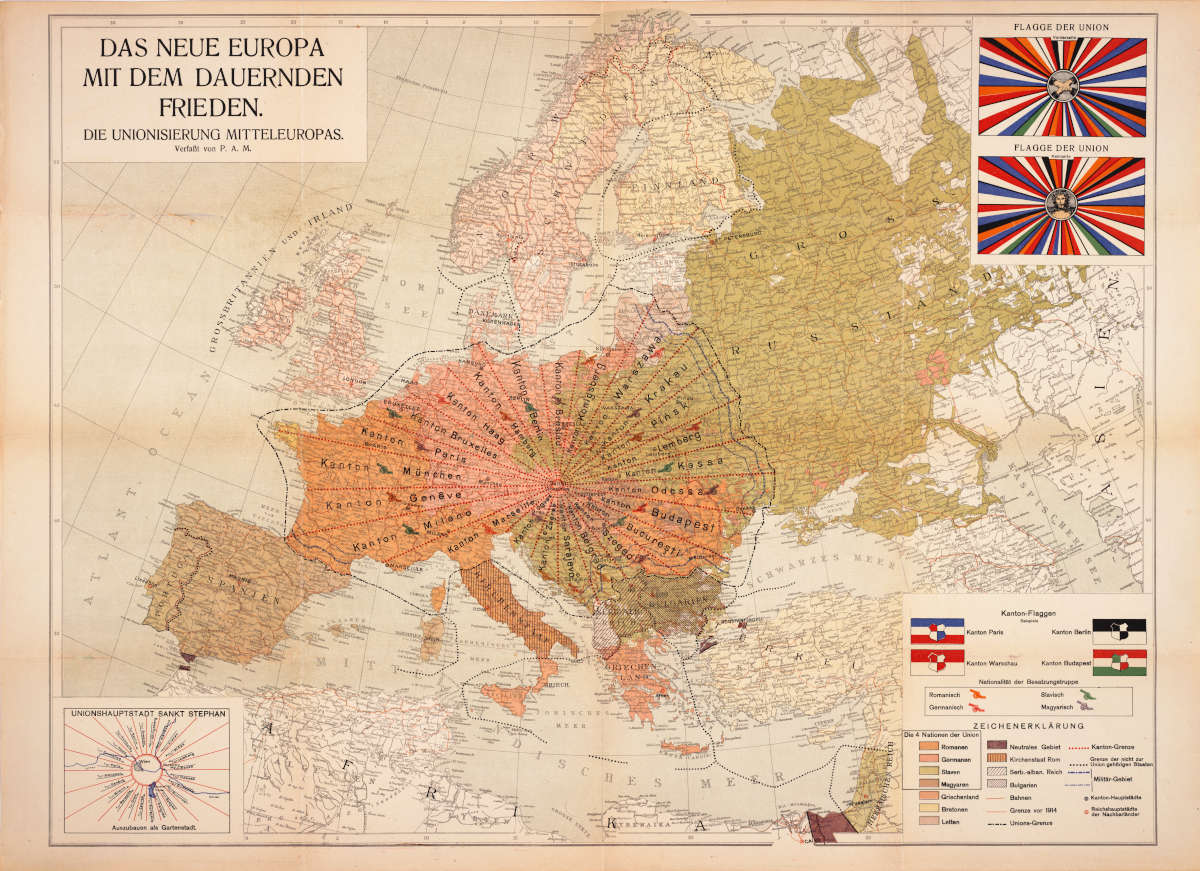
P.A. Maas, son of a Viennese publisher, offered this proposal after World War I. “Does anyone really seriously believe that the consequences of the peace negotiations so far have secured eternal peace?” he wrote. “Does anyone really seriously believe that the revenge of the individual peoples has been satisfied by the consequences of the present peace negotiations?”
Instead he proposed to divide the continent into 24 wedge-shaped “Kantons,” each named for a prominent city. These would meet at St. Stephen’s Cathedral in Vienna, center of the new union’s capital, which Maas envisioned as “a large, wide garden city, hygienically designed and expanded.” The Kantons would cut across cultural and ethnic lines and across the old national borders, and each one would include at least two of Europe’s “Nations” — Romans, Germans, Slavs, and Magyars — so that “racial hatred does not prevail as before, but the love of the people prevails.” The three-year presidency would rotate among the Nations, all colonies would be jointly owned, everyone would speak Esperanto, and everyone over 20 (except married women) could vote.
“To many a reader this work may appear as the result of over-excited imagination; someday, though late, the knowledge of truth will gain the upper hand, and perhaps many things which have been stimulated by me here will be realized.”
(From the Cornell University Library.)
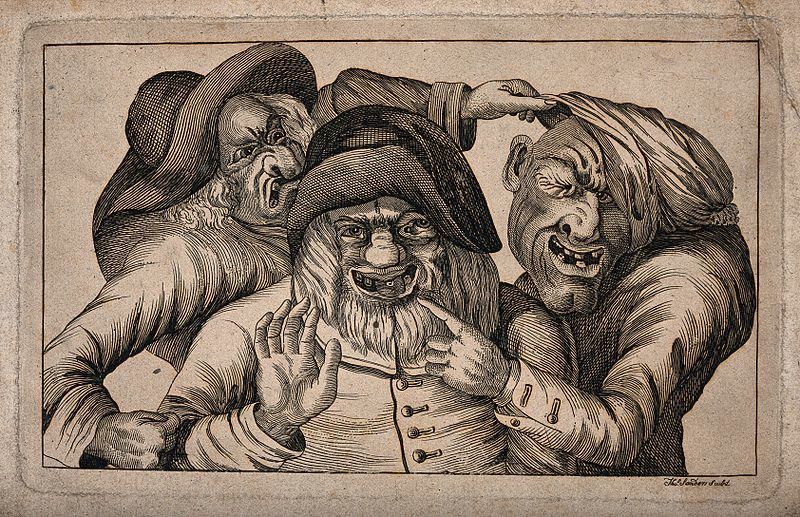
Members of the Liverpool Ugly Faces Club, 1745:
Worst, apparently, was merchant Joseph Farmer: “Little eyes, one bigger than ye other, long nose, thin lanthorn jaws, large upper lip, mouth from ear to ear resembling the mouth of a shark. A rotten set of irregular teeth, which are set off to great advantage by frequent laughing. His visage long and narrow. His looks upon the whole, extraordinary haggard, odd, comic, and out of ye way. In short, possessed of every extraordinary qualification to render him ye Phoenix of ye Society, as the like will not appear again this 1000 years.”
The club’s motto was Tetrum ante omnia vultum, “Before all things, an ugly face.”
(From the Liverpool Mercury, Sept. 29, 1887.)
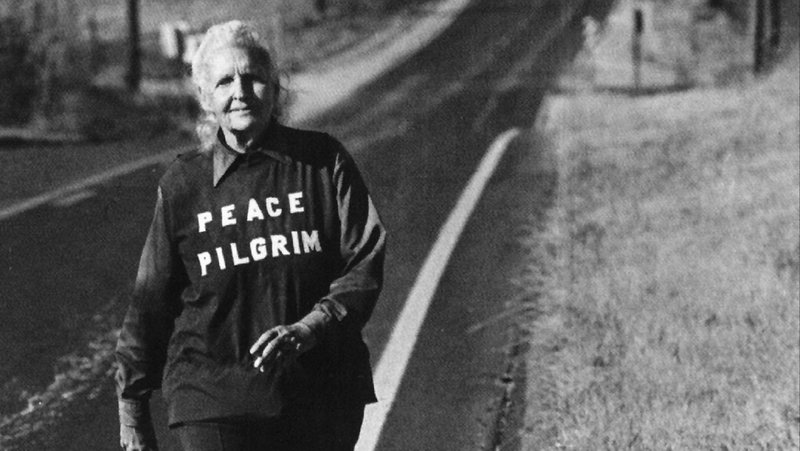
In 1953 Mildred Norman renounced “an empty life of money and things” and dedicated herself to promoting peace. She spent the next three decades walking through the United States to spread a message of simplicity and harmony. In this week’s episode of the Futility Closet podcast we’ll describe her unusual life as a peace pilgrim.
We’ll also admire Wellington’s Mittens and puzzle over a barren Christmas.
Intro:
In 1956, Navy pilot Tom Attridge overtook his own rounds in a supersonic jet.
Flemish artist Cornelius Gijsbrechts painted a rendering of the back of a painting.


