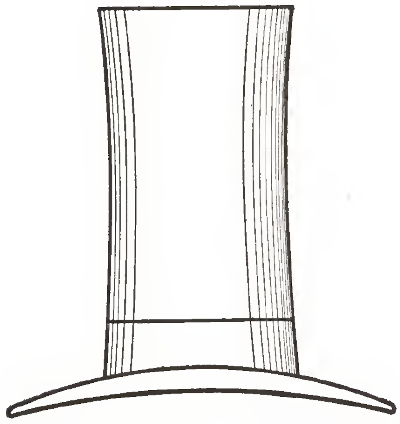
A striking oddity from Matthew Luckiesh’s Visual Illusions, 1922. The height of this silk hat appears much greater than its width, but the two are the same.
“A pole or a tree is generally appraised as of greater length when it is standing than when it lies on the ground. This illusion may be demonstrated by placing a black dot an inch or so above another on a white paper. Now, at right angles to the original dot place another at a horizontal distance which appears equal to the vertical distance of the first dot above the original. On turning the paper through ninety degrees or by actual measurement, the extent of the illusion will become apparent.”
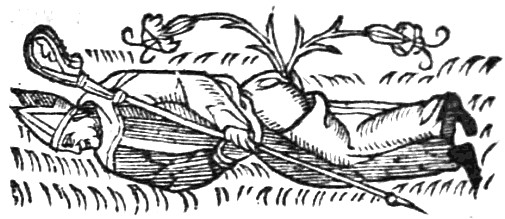
At Nuremburg a wolf’s tooth was shown to travellers … on which an Abbé is represented lying dead in a meadow, with three lilies growing out of his posteriors. This is not only the worst pun that ever was carved upon a wolf’s tooth, but the worst that ever was or will be made. The Abbé is designed to express the Latin word Habe. He is lying dead in a meadow, … mort en pré; this is for mortem præ; and the three lilies in his posteriors are to be read oculis, … au cu lis. Thus, according to the annexed explanation, the whole pun, rebus, or hieroglyphic, is Habe mortem præ oculis.
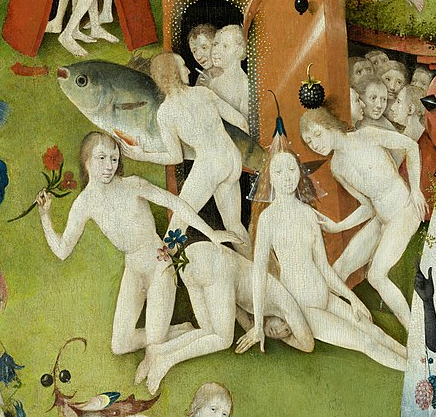
In other words, the French phrase Abbé mort en pré au cul lys (“Abbot died in a meadow with lilies in his rump”) sounds like the Latin phrase Habe mortem præ oculis (“Keep death before your eyes”). This joke appears to be referenced in Hieronymus Bosch’s 1504 triptych The Garden of Earthly Delights:
In May 1884, a group of schoolboys on a beach in Zanzibar came upon a large mass of pumice stone that had washed up at the tidemark. Evidently it had been floating in the sea for some time, as its bottom was crusted with barnacles and weed. Welded to its upper surface, they discovered, were dozens of skeletons, including humans, monkeys, and two big cats, probably Sumatran tigers.
It was a relic of the eruption of Krakatoa, which had taken place nine months earlier in the Dutch East Indies. The rock had floated 4,000 miles across the Indian Ocean to the east coast of Africa.
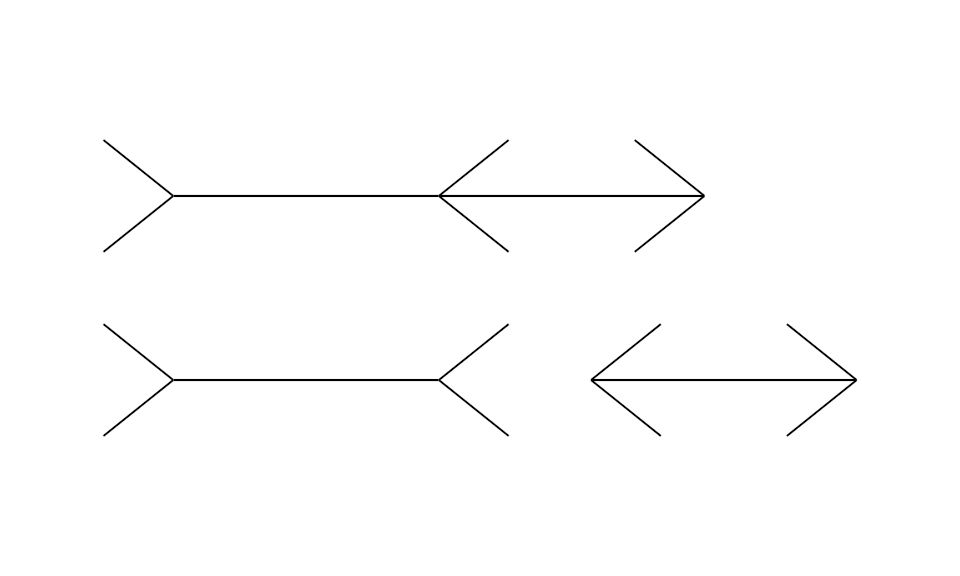
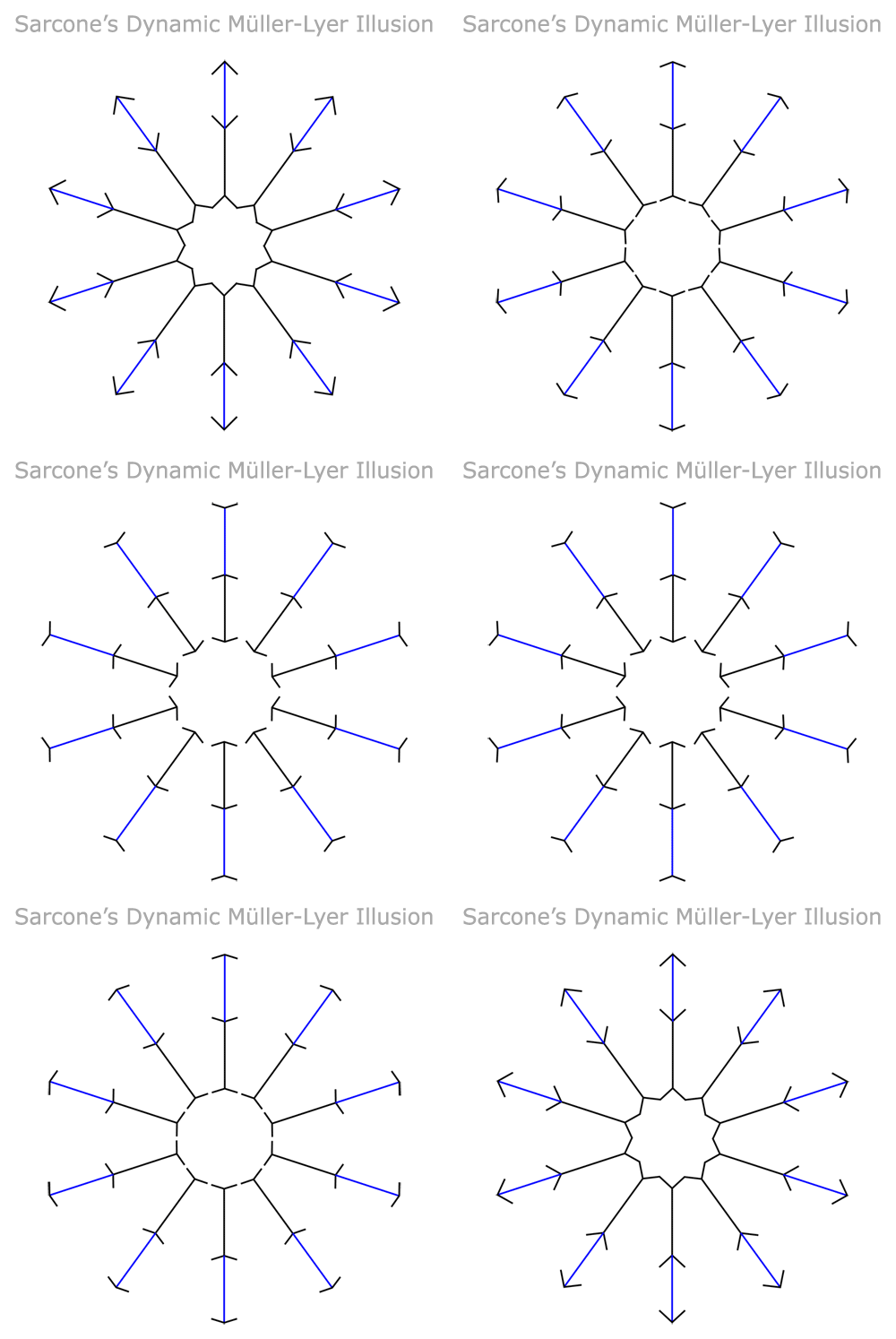
This is a familiar variation on the Müller-Lyer optical illusion. The horizontal segments on the left appear longer than those on the right, but in fact they’re all the same length.
Italian researcher Gianni A. Sarcone devised the dynamic demonstration below — the blue and black segments are all the same length and do not change; only the “fins” are moving:
The peculiar circumstances of life aboard the International Space Station both advanced and retarded astronaut Scott Kelly’s age relative to that of his identical twin brother Mark, who remained on the ground.
Radiation, weightlessness, and changes in diet shortened Scott’s telomeres more quickly than his brother’s, effectively causing him to age more quickly.
At the same time, due to relativistic effects, Scott aged about 8.6 milliseconds less than Mark during his year in space.
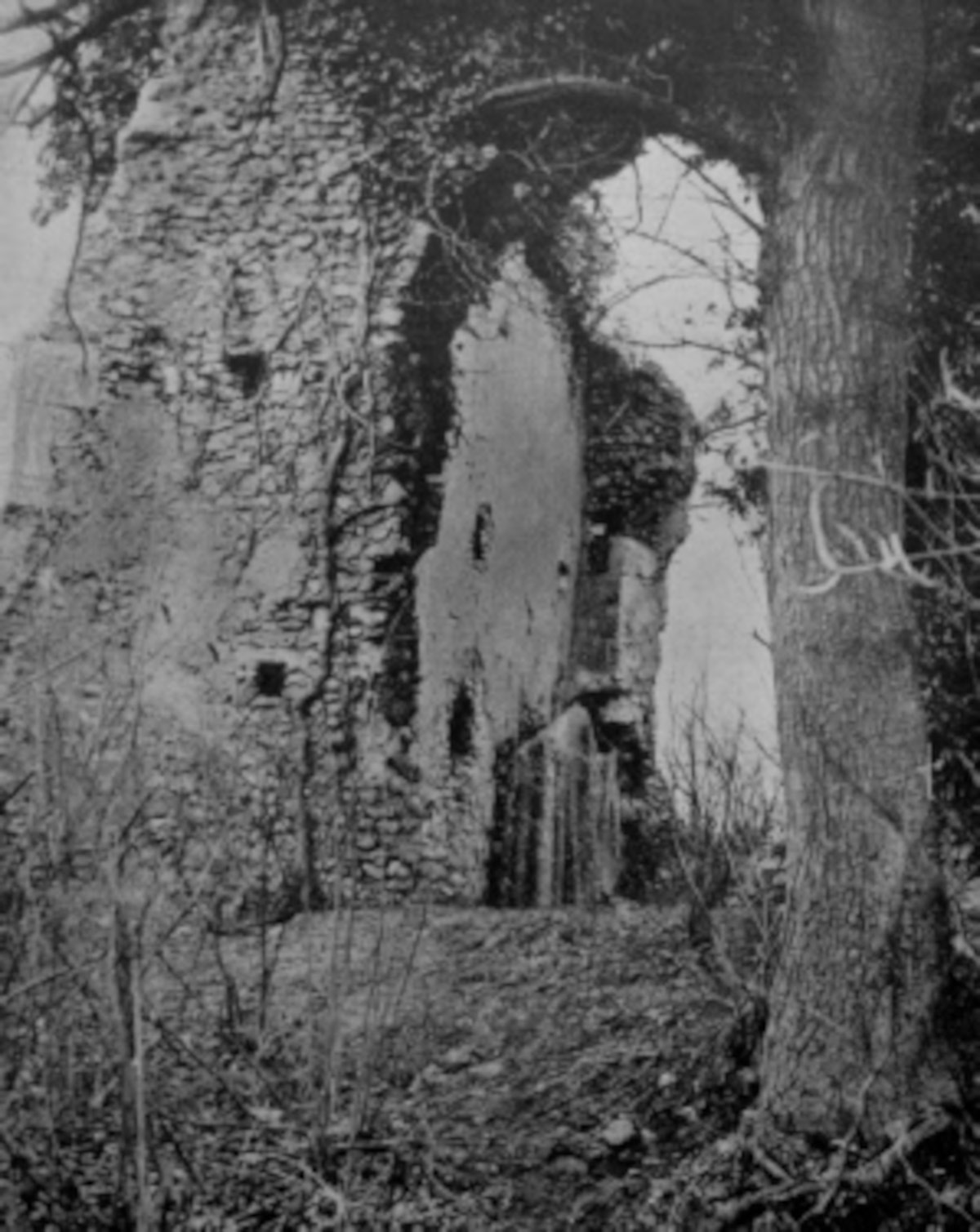
In 1907, historian Reginald Hine, photographer Thomas Latchmore, and artist F.L. Griggs took a camera to Hertfordshire’s Minsden Chapel hoping to photograph the ghost of a murdered monk whose spirit was said to haunt the place. Hine published this photo in his 1929 History of Hitchin, pointing out “the cowled apparition whose form can faintly be discerned” in the image:
In 1930 Latchmore admitted that the image had been a hoax, created with a double exposure; the ghostly figure may be Hine himself.
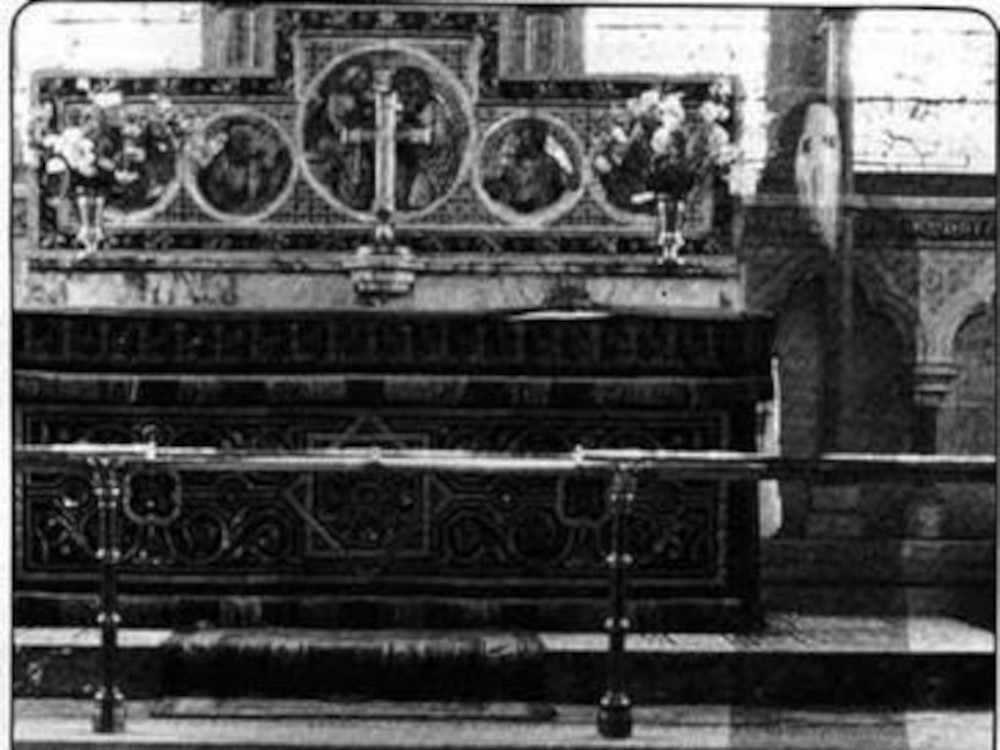
While we’re at it: In 1963 by the Rev. Kenneth Lord took this photo in the Church of Christ the Consoler on the grounds of Newby Hall in North Yorkshire:
Ostensibly the figure is another ghostly monk, this one wearing a shroud over its face. If it’s not a double exposure then the figure stands as much as 9 feet tall; make your own judgment.
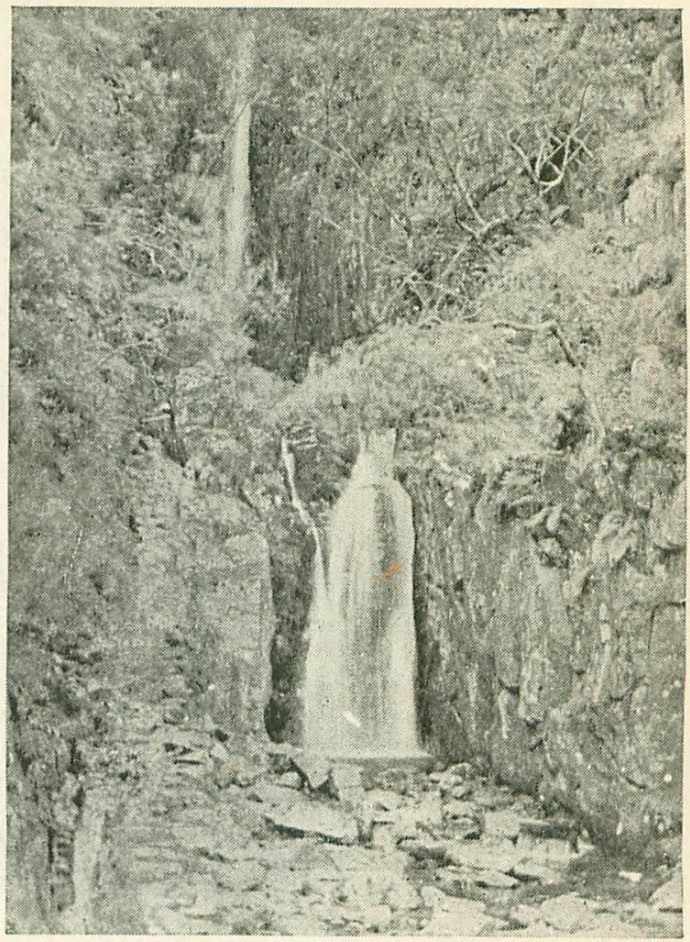
And a reader sent this image in to the Strand in July 1897:
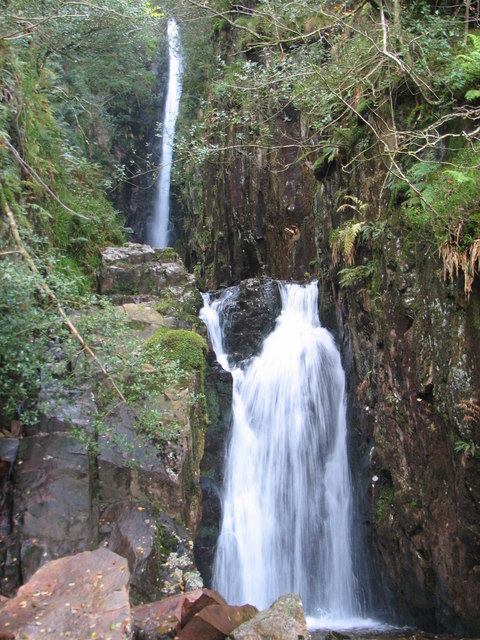
Taken at Scale Force, the Lake District’s highest waterfall, “It is a perfect representation of a stately, long-bearded old man, clothed in a flowing robe, with a crown and sceptre. … The form is perfect natural. I did not notice it until after the photo was developed.”
Interestingly, as recently as 2006 the old man was still there:
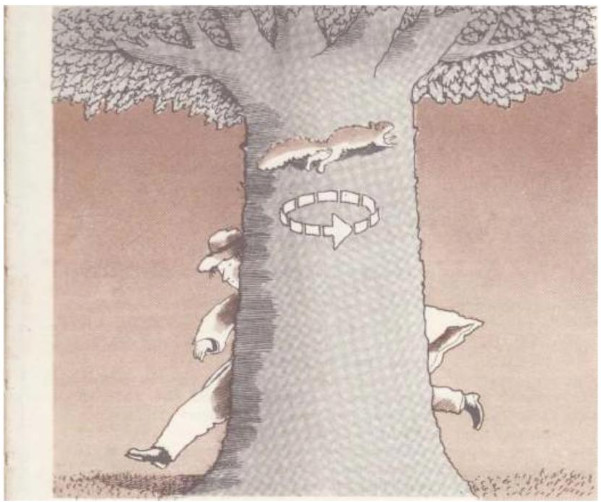
‘I had quite a bit of fun playing hide-and-seek with a squirrel,’ he said. ‘You know that little round glade with a lone birch in the centre? It was on this tree that a squirrel was hiding from me. As I emerged from a thicket, I saw its snout and two bright little eyes peeping from behind the trunk. I wanted to see the little animal, so I started circling round along the edge of the glade, mindful of keeping the distance in order not to scare it. I did four rounds, but the little cheat kept backing away from me, eyeing me suspiciously from behind the tree. Try as I did, I just could not see its back.’
‘But you have just said yourself that you circled round the tree four times,’ one of the listeners interjected.
‘Round the tree, yes, but not round the squirrel.’
‘But the squirrel was on the tree, wasn’t it?’
‘So it was.’
‘Well, that means you circled round the squirrel too.’
‘Call that circling round the squirrel when I didn’t see its back?’
‘What has its back to do with the whole thing? The squirrel was on the tree in the centre of the glade and you circled round the tree. In other words, you circled round the squirrel.’
‘Oh no, I didn’t. Let us assume that I’m circling round you and you keep turning, showing me just your face. Call that circling round you?’
‘Of course, what else can you call it?’
‘You mean I’m circling round you though I’m never behind you and never see your back?’
‘Forget the back! You’re circling round me and that’s what counts. What has the back to do with it?’
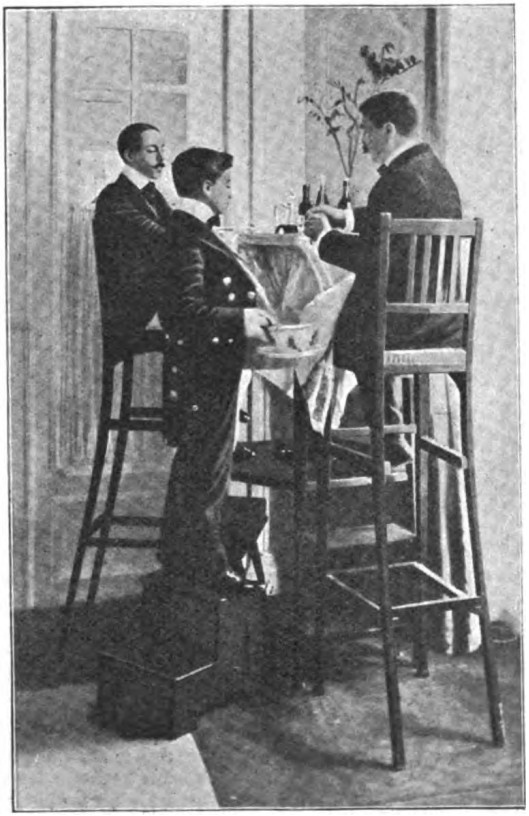
The curious photograph which is here reproduced shows the well-known inventor of flying-machines, M. Santos Dumont, perched upon what looks like an abnormally lofty office-stool, accompanied by a friend in a similar position. The reason for this peculiarity lies in the fact that M. Santos Dumont is so accustomed to the sensation of being elevated above the earth that he feels more at home when he is so, even at meal-times.
This sounds like a joke, but the New York Herald tells of a dinner Santos-Dumont held in Paris that year:
From tables seven feet from floor to cloth the viands and wines were served, while the waiters attending to their wants walked about on stilts. The chairs, with their long, thin legs, were reached by mounting a short flight of portable steps.
In a dream someone said to me, ‘Any general thesis which is put forward without a concrete example is therein badly presented’. That was all he said, and I was about to point out the irony that in merely putting forward this thesis by means of a general statement the speaker had failed his own requirement of providing an example when it suddenly occurred to me, as I exclaimed to him, ‘Ah, I see. Your putting forward this thesis without an example is itself the concrete example’. But when I awoke I realized there was a problem here. If indeed the speaker is credited with having given me a concrete example of an example-less bad presentation, then that credit must be immediately withdrawn, because what he has given me is not an example of an example-less bad presentation. But if it is not an example, then it must once again be received as an example of example-less presentation, but then it once again is not an example, and so on forever.
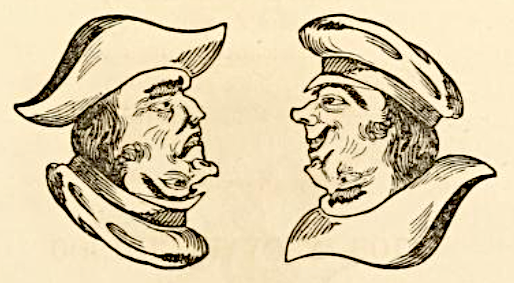
Turn this book and at us look,
Heed our features, too,
Expressive, fine, our faces shine,
To please such folks as you;
With heads but four, we want no more,
Our eyes give us no light;
Our ears are deaf, but yet no grief
Disturbs us day nor night;
Deprived of feet we can not walk
In houses where we go,
The reason why we do not sigh,
Is left for you to know.
Ever free from care are we,
So turn this book, and at us look.
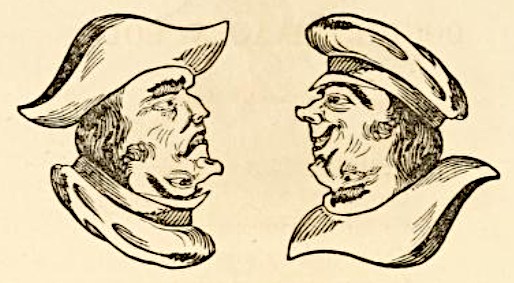
Reading the first letter in each line produces the phrase “The Two Oddities.” Inverting the book gives the answer to the riddle: The “four heads” are actually one carefully devised figure — each face is the other upside down: