
Starting Early

A is an Abolitionist –
A man who wants to free
The wretched slave — and give to all
An equal liberty.

B is a Brother with a skin
Of somewhat darker hue,
But in our Heavenly Father’s sight,
He is as dear as you.

C is the Cotton-field, to which
This injured brother’s driven,
When, as the white-man’s slave, he toils,
From early morn till even.
– From The Anti-Slavery Alphabet, a children’s book printed for an anti-slavery fair, 1847
Evermore
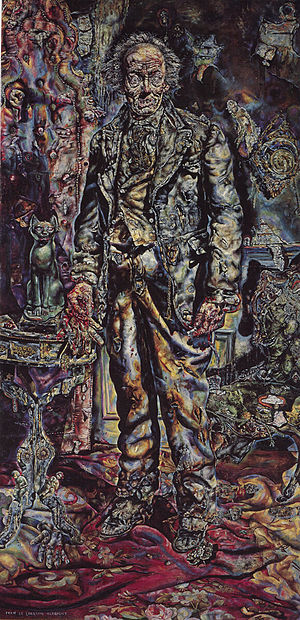
Every year since 1949, a mysterious figure has visited the grave of Edgar Allan Poe on the author’s birthday, Jan. 19.
Early in the morning, a black-clad figure with a silver-tipped cane enters the Westminster Hall and Burying Ground in Baltimore, goes to Poe’s grave, raises a toast of cognac, and leaves behind three red roses.
He wears a black coat and hat and obscures his face, so his identity is unknown, but in 1993 he left a note saying “The torch will be passed.” In 1999, a second note said that the toaster had died … but since then a younger person has apparently taken his place.
“All that we see or seem,” Poe wrote, “is but a dream within a dream.”
A Bedtime Story

“At length, the moon arose in great splendour, and little Henry saw at a distance an old abbey, all covered with ivy, and looking so dark and dismal, it would frighten any one from going in. But Henry’s little heart, occupied by the idea of his mamma, and with grief that he could not find her, felt no fear; but walking in, he saw a cell in the corner that looked like a baby-house, and, with Fidelle by his side, he bent his little steps towards it, and seating himself on a stone, he leaned his pretty head against the old wall, and fell fast asleep.”
– From The Extraordinary Adventures of Poor Little Bewildered Henry, Who Was Shut Up In An Old Abbey For Three Weeks, A Story Founded on Fact, 1850
Porlock’s Contribution

Samuel Taylor Coleridge’s famous poem “Kubla Khan” (“In Xanadu did Kubla Khan/A stately pleasure-dome decree”) is considered a high point of Romanticism, but it’s incomplete. Coleridge said he had seen the entire course of the poem in a dream, but was interrupted while writing it down:
On awakening he appeared to himself to have a distinct recollection of the whole, and taking his pen, ink, and paper, instantly and eagerly wrote down the lines that are here preserved. At this moment he was unfortunately called out by a person on business from Porlock, and detained by him above an hour, and on his return to his room, found, to his no small surprise and mortification, that though he still retained some vague and dim recollection of the general purport of the vision, yet, with the exception of some eight or ten scattered lines and images, all the rest had passed away like the images on the surface of a stream into which a stone has been cast, but, alas! without the after restoration of the latter!
To this day no one knows the identity of the “person from Porlock” or what his business was, but he left Coleridge with only 54 lines.
Medic!
What do these writers have in common?
- Ernest Hemingway
- John Dos Passos
- e.e. cummings
- Somerset Maugham
- John Masefield
- Malcolm Cowley
- Sidney Howard
- Robert Service
- Louis Bromfield
- Harry Crosby
- Julian Green
- Dashiell Hammett
- William Seabrook
- Robert Hillyer
- John Howard Lawson
- William Slater Brown
- Charles Nordhoff
- Sir Hugh Walpole
- Desmond MacCarthy
- Russell Davenport
- Edward Weeks
- C. Leroy Baldridge
- Samuel Chamberlain
All drove ambulances during World War I.
High Profile
There are only two books in the Bible that do not contain the word God.
They are Esther and Song of Solomon.
Alexander Selkirk

Robinson Crusoe isn’t entirely fiction — it’s based on the story of a real Scottish sailor, Alexander Selkirk, who spent four years marooned on an uninhabited island.
Selkirk was sailing with privateer William Dampier in 1703 when he began to doubt the seaworthiness of their galleon, the Cinque Ports. Finally he decided to stay ashore voluntarily on the Juan Fernández islands in the South Pacific with only a musket, gunpowder, carpenter’s tools, a knife, a Bible, and his clothing.
At first Selkirk was wracked with loneliness and regret, but he soon acclimated to island life. He domesticated wild cats to keep rats at bay, grew turnips, cabbage and pepper berries, and built two huts of pimento trees. He hunted wild goats and made clothing of their skins and forged a knife from cast-off barrel rings.
There’s a telling postscript to the story. After four years and four months, Selkirk was rescued by William Dampier, the same man who had left him ashore — but Selkirk was surprised to see he was sailing a different ship. The Cinque Ports had sunk, losing most hands. Selkirk, it seems, had been right to stay on the island.
(Image: Wikimedia Commons)
Pearl Curran
In 1913, Chicago housewife Pearl Curran was messing around with a Ouija board when she claimed to receive the message “Many moons ago I lived. Again I come. Patience Worth my name. If thou shalt live, so shall I.”
On investigating the name, she claimed to find that a Patience Worth had lived in Dorsetshire, England, in either 1649 or 1694. Through the Ouija board Patience told Curran that she had moved to the United States and been murdered by Indians. “From England across the sea. Could I but hold your ear for the lessons I could teach!”
So Pearl/Patience began to publish novels, stories and poetry. Critics pointed out that a 17th-century spirit shouldn’t be able to produce a Victorian novel, as Patience did, but supporters argued that the language she used was beyond Pearl’s normal abilities.
That may have spelled the end of their partnership, actually. Apparently frustrated with the intelligence of her host, Patience clammed up, except for the occasional sarcastic comment. She’d gone silent by the time Pearl died in 1937 … and, presumably, joined her.
“What Is This Sea Which Is All Round Me?”
“The next day I was sad and sick at heart, for I felt how dull it was to be thus cut off from all the rest of the world. I had no great wish for work: but there was too much to be done for me to dwell long on my sad lot. Each day as it came, I went off to the wreck to fetch more things; and I brought back as much as the raft would hold.”
– From Robinson Crusoe in Words of One Syllable by Mary Godolphin, 1869
Does This Count as Plagiarism?
Published in 1838, Edgar Allan Poe’s novel The Narrative of Arthur Gordon Pym of Nantucket tells of four men who survive a shipwreck. Starving, they draw lots to see which one is to be eaten. The loser is a man named Richard Parker.
Forty-six years later, in 1884, a yacht named the Mignonette sank during a journey from England to Australia. Four survivors were stranded in a dinghy. After 16 days, Captain Dudley and his two mates killed and ate the cabin boy–whose name was Richard Parker.
The three eventually returned to England, where they were convicted of murder.
The Poe Cryptographic Challenge
Edgar Allan Poe was fascinated by cryptograms. He once offered a free magazine subscription to any reader who could stump him, and he claimed to have solved all 100 ciphers that were sent in.
That mania ultimately created a mystery that lasted 150 years after the writer’s death. In 1840 Poe published two ciphers sent in by a “Mr. W.B. Tyler” and challenged readers to solve them. No readers succeeded, and in fact the first cipher wasn’t cracked until 1992, when University of Illinois English professor Terence Whalen decoded a passage from Joseph Addison’s 1713 play Cato.
The second puzzle was even harder, a polyalphabetic substitution cipher using several different symbols for each English letter — and containing several mistakes. It was finally solved in 2000 by Toronto software engineer Gil Broza:
It was early spring, warm and sultry glowed the afternoon. The very breezes seemed to share the delicious langour of universal nature, are laden the various and mingled perfumes of the rose and the –essaerne (?), the woodbine and its wildflower. They slowly wafted their fragrant offering to the open window where sat the lovers. The ardent sun shoot fell upon her blushing face and its gentle beauty was more like the creation of romance or the fair inspiration of a dream than the actual reality on earth. Tenderly her lover gazed upon her as the clusterous ringlets were edged (?) by amorous and sportive zephyrs and when he perceived (?) the rude intrusion of the sunlight he sprang to draw the curtain but softly she stayed him. “No, no, dear Charles,” she softly said, “much rather you’ld I have a little sun than no air at all.”
Probably it’s a quote from a novel of the time.
Interestingly, some scholars think Poe himself composed the ciphers, as city directories show no W.B. Tyler in that period. We’ll never know for sure, but Poe himself once wrote:
Ye who read are still among the living; but I who write shall have long since gone my way into the region of shadows. For indeed strange things shall happen, and secret things be known, and many centuries shall pass away, ere these memorials be seen of men. And, when seen, there will be some to disbelieve, and some to doubt, and yet a few who will find much to ponder upon in the characters here graven with a stylus of iron.
Low Expectations
The first Harry Potter book was given a print run of only 1,000 copies.
Today, these copies are valued at between £16,000 and £25,000 each.
Judging a Book by Its Cover
Because of its cover design, some readers briefly imagined that SF author Jack Dann’s 1984 novel The Man Who Melted was called The Man Who Melted Jack Dann. That inspired some readers to search for other such titles, with some success:
- The Joy of Cooking Irma S. Rombauer
- Captain Blood Returns Raphael Sabatini
- Flush Virginia Woolf
- Contact Carl Sagan
Any others? You’ll get extra credit for bending parts of speech (Two Sisters Gore Vidal).
The Pied Piper

The pied piper is not just a fairy tale. Something specific and terrible appears to have happened in the German town of Hamelin on June 26, 1284. What it was is uncertain, but it seems to have claimed the town’s children, perhaps in a mass drowning, burial, epidemic or exodus. An inscription from 1603 reads:
Anno 1284 am dage Johannis et Pauli
war der 26. junii
Dorch einen piper mit allerlei farve bekledet
gewesen CXXX kinder verledet binnen Hamelen gebo[re]n
to calvarie bi den koppen verloren
In the year of 1284, on John’s and Paul’s day
was the 26th of June
By a piper, dressed in all kinds of colors,
130 children born in Hamelin were seduced
and lost at the place of execution near the Koppen.
Rats weren’t added to the story until the late 16th century. The site of the children’s disappearance, on Coppenbrugge mountain, is now a site of pagan worship, and a law forbids singing and music in one street of Hamelin, out of respect for the victims … though we may never know what their fate was.
Start Again

Henry Roth had writer’s block for 60 years.
He published Call It Sleep in 1934 and couldn’t produce a followup until 1994.
A Barman’s Field Guide
“Eight Degrees of Drunkenness”:
- The Ape-drunk, who leaps and sings and hollers
- The Lion-drunk, who is quarrelsome and rude
- The Swine-drunk, who is sleepy and lumpish
- The Sheep-drunk, wise in his own conceit, but unable to speak
- The Maudlin-drunk, who declares he loves all mankind
- The Martin-drunk, who drinks himself sober again
- The Goat-drunk, who is lascivious
- The Fox-drunk, who is crafty, like the Dutch, who bargain when drunk
– Thomas Nash, 1592
New Year Be Damned
Jonathan Swift’s “Resolutions — When I Come to Be Old”:
- Not to Marry a young Woman.
- Keep young Company unless they reely desire it.
- Be peevish or morose, or suspicious.
- Scorn present Ways, or Wits, or Fashions, or Men, or War, &c.
- Be fond of Children, or let them come near me hardly.
- Tell the same Story over and over to the same People.
- Be covetous.
- Neglect decency, or cleenlyness, for fear of falling into Nastyness.
- Be over severe with young People, but give Allowances for their youthfull follyes, and Weeknesses.
- Be influenced by, or give ear to knavish tatling Servants, or others.
- Be too free of advise nor trouble any but those that desire it.
- Desire some good Friends to inform me which of these Resolutions I break, or neglect, & wherein; and reform accordingly.
- Talk much, nor of my self.
- Boast of my former beauty, or strength, or favor with Ladyes, &c.
- Hearken to Flatteryes, nor conceive I can be beloved by a young woman.
- Be positive or opiniative.
- Sett up for observing all these Rules, for fear I should observe none.
Thank You for Your Submission
Rejection letters sent to Henry James:
“A duller story I have never read. It wanders through a deep mire of affected writing and gets nowhere, tells no tale, stirs no emotion but weariness. The professional critics who mistake an indirect and roundabout use of words for literary art will call it an excellent piece of work; but people who have any blood in their veins will yawn and throw it down — if, indeed, they ever pick it up.”
“It is surely the n+1st power of Jamesiness. … It gets decidedly on one’s nerves. It is like trying to make out page after page of illegible writing. The sense of effort becomes acutely exasperating. Your spine curls up, your hair-roots prickle & you want to get up and walk around the block. There is no story — oh! but none at all …”
They didn’t seem to bother him. “Do not mind anything that anyone tells you about anyone else,” he said. “Judge everyone and everything for yourself.”
Oops
On March 15, 1980, the Boston Globe ran an editorial about the nation’s economic woes:
Certainly it is in the self-interest of all Americans to impose upon themselves the kind of economic self-discipline that President Carter urged repeatedly yesterday in his sober speech to the nation. As the President said, inflation, now running at record rates, is a cruel tax, one that falls most harshly upon those least able to bear the burden.
There’s nothing wrong with that, but it carried the headline “Mush From the Wimp.”
In 1984 Globe editorial writer Kirk Scharfenberg admitted he’d written it. “I meant it as an in-house joke and thought it would be removed before publication,” he wrote. “It appeared in 161,000 copies of the Globe the next day.”
Much Ado About Nothing
You can fool some of the people all of the time.
Perhaps inspired by Thomas Chatterton, the teenage Samuel William Henry Ireland (1777-1835) “found” an old deed with Shakespeare’s signature.
His father, a collector, was overjoyed, so Ireland went on finding more Shakespeareana — a promissory note, a declaration of Protestant faith, letters to Anne Hathaway and to Queen Elizabeth, books with notes in the margins and “original” manuscripts for Hamlet and King Lear.
Amazingly, these were all authenticated by experts of the day. Ireland wasn’t caught until at age 18 he wrote an entire “lost” play, which was mounted at Drury Lane Theatre. As a playwright, he couldn’t match the Bard, and Vortigern and Rowena closed after a single performance on April 2, 1796.
Sadly, his father took the blame, as no one could believe such a young man could pull off such a forgery. His son fled to France and died in obscurity.
Irish Bulls
Two examples of “Irish bulls,” or ludicrous published statements:
It is in a Belfast paper that may be read the account of a murder, the result of which is described thus: “They fired two shots at him; the first shot killed him, but the second was not fatal.”
Connoisseurs in [Irish] bulls will probably say that this is only a blunder. Perhaps the following will please them better: “A man was run down by a passenger train and killed; he was injured in a similar way a year ago.”
– From Henry B. Wheatley, Literary Blunders: A Chapter in the “History Of Human Error,” 1893