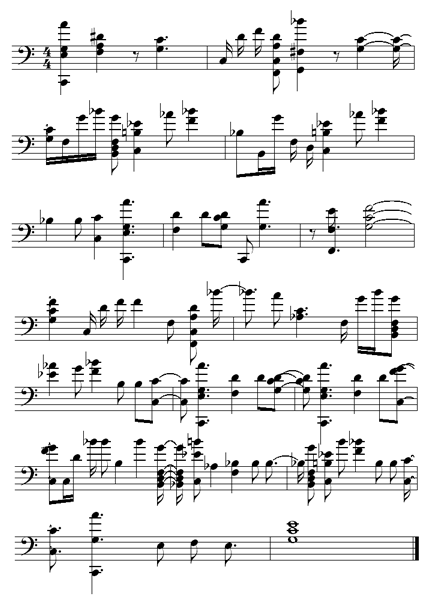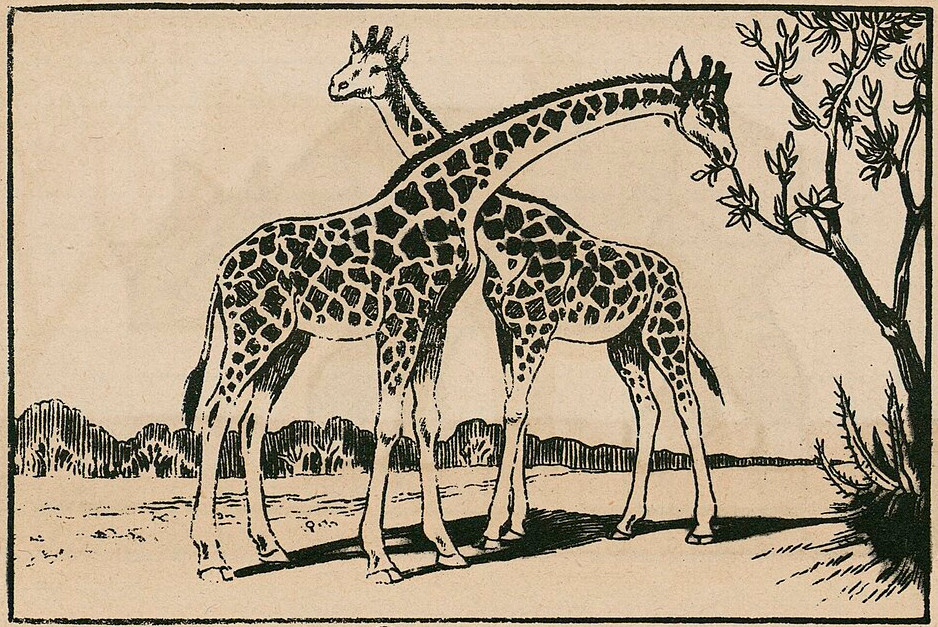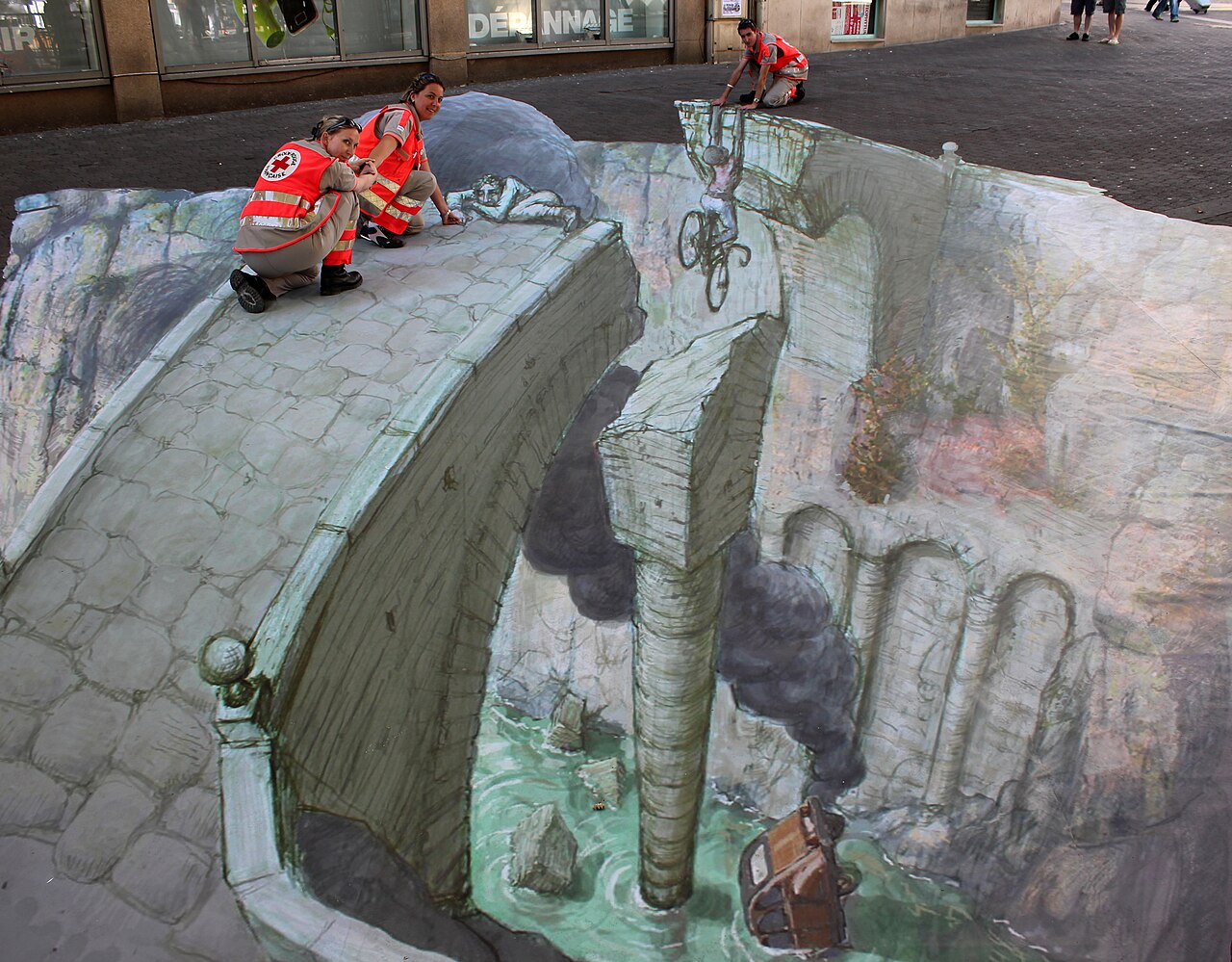
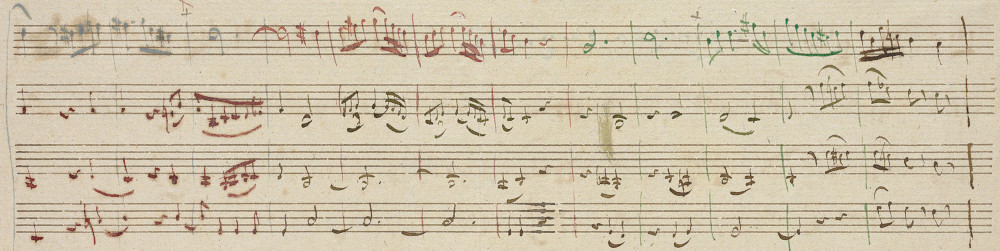
By Robert William Petrick, a perfectly requited sentiment.

By Robert William Petrick, a perfectly requited sentiment.
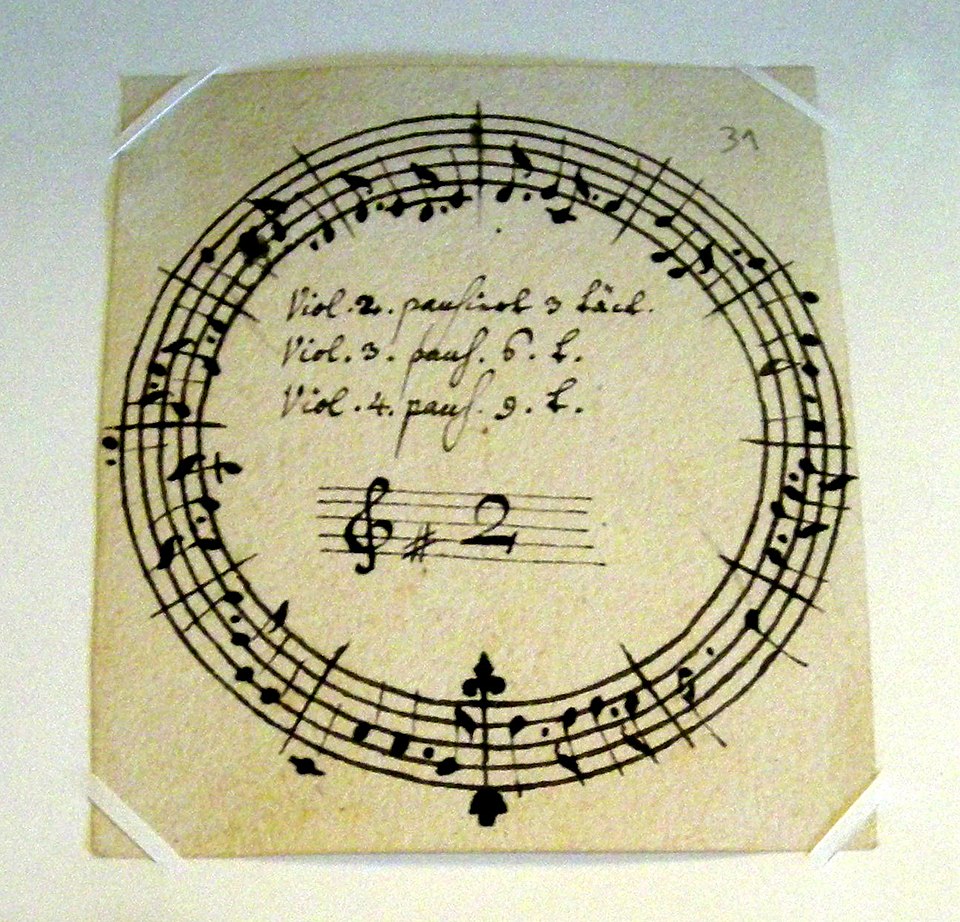
From the Strand, December 1901, “one of Sir John Stainer’s musical jokes, two hymns in one — in B flat or G major, according to the manner in which it is read, upside up or upside down. It was written as an autograph for a friend of his son’s.”

In discussing the paintings, [Jackson Pollock] would ask, ‘Does it work?’ Or in looking at mine, he would comment, ‘It works’ or ‘It doesn’t work.’ He may have been the first artist to have used the word ‘work’ in that sense.
— Lee Krasner, quoted in B.H. Friedman, Jackson Pollock: Energy Made Visible, 1972
Titles of paintings by Salvador Dalí:
He wrote, “It is not necessary for the public to know whether I am joking or whether I am serious, just as it is not necessary for me to know it myself.”

There are several simple little drawing tricks which the nurse may use to arouse the interest of her patient as she uses puzzles and catches. The oldest of these is by Hogarth and represents a soldier and his dog going through a doorway. As is seen by the diagram, it consists of three straight lines and one curved one.
— William Rush Dunton, Occupation Therapy, 1915
In the 1950s, humorist Roger Price invented “Droodles,” simple enigmatic drawings explained by their captions. Frank Zappa used one on the cover of a 1982 album:

It’s called Ship Arriving Too Late to Save a Drowning Witch.

Wikimedia user Tarquin points out that the natural rhythm of spoken language can be used to teach polyrhythms.
Above: The phrase “cold cup of tea,” spoken naturally, approximates a rhythm of 2 against 3.
Below: The phrase “what atrocious weather” approximates 4 against 3.


Two rhapsodies on the name of French philosopher Michel Onfray, by Basile Morin.
In the chain ambigram above, the first name is transfigured (at some point) into the last.
In the tessellation ambigram below, the two names appear simultaneously as figure and ground.


Ambigram shot glasses by Basile Morin. The design is here.

In 1782, during a tour of Hampton Court, Hannah More encountered landscape architect Lancelot “Capability” Brown, who compared his art to literary composition:
‘Now there‘ said he, pointing his finger, ‘I make a comma, and there’ pointing to another spot, ‘where a more decided turn is proper, I make a colon; at another part, where an interruption is desirable to break the view, a parenthesis; now a full stop, and then I begin another subject.’
From a letter to her sister, December 31, 1782.

Illusion Diffusion uses Stable Diffusion to produce illusion artwork.
The image above was produced by uploading an image of the Mona Lisa and specifying the prompt “colour photograph of an Italian city in the Renaissance” (illusion strength 1 and seed 0).
Below is Vermeer’s Girl With a Pearl Earring modified with the prompt “Amsterdam canals in 17th century” (illusion strength 1.8 and seed 0).