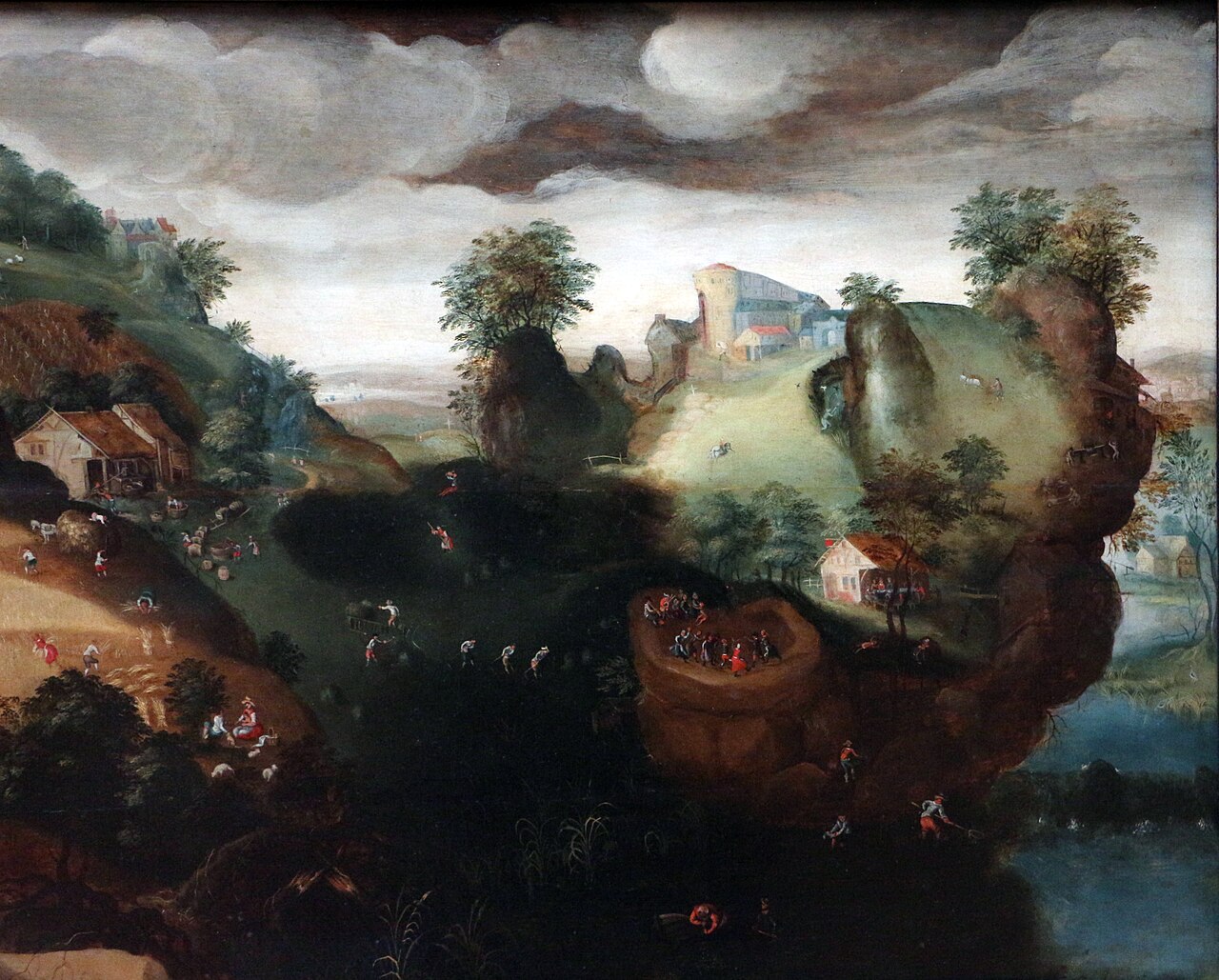

The Royal Museums of Fine Arts of Belgium hold two anthropomorphic landscapes painted in the 16th century, one masculine (above) and one feminine (below).
The artist is unknown.
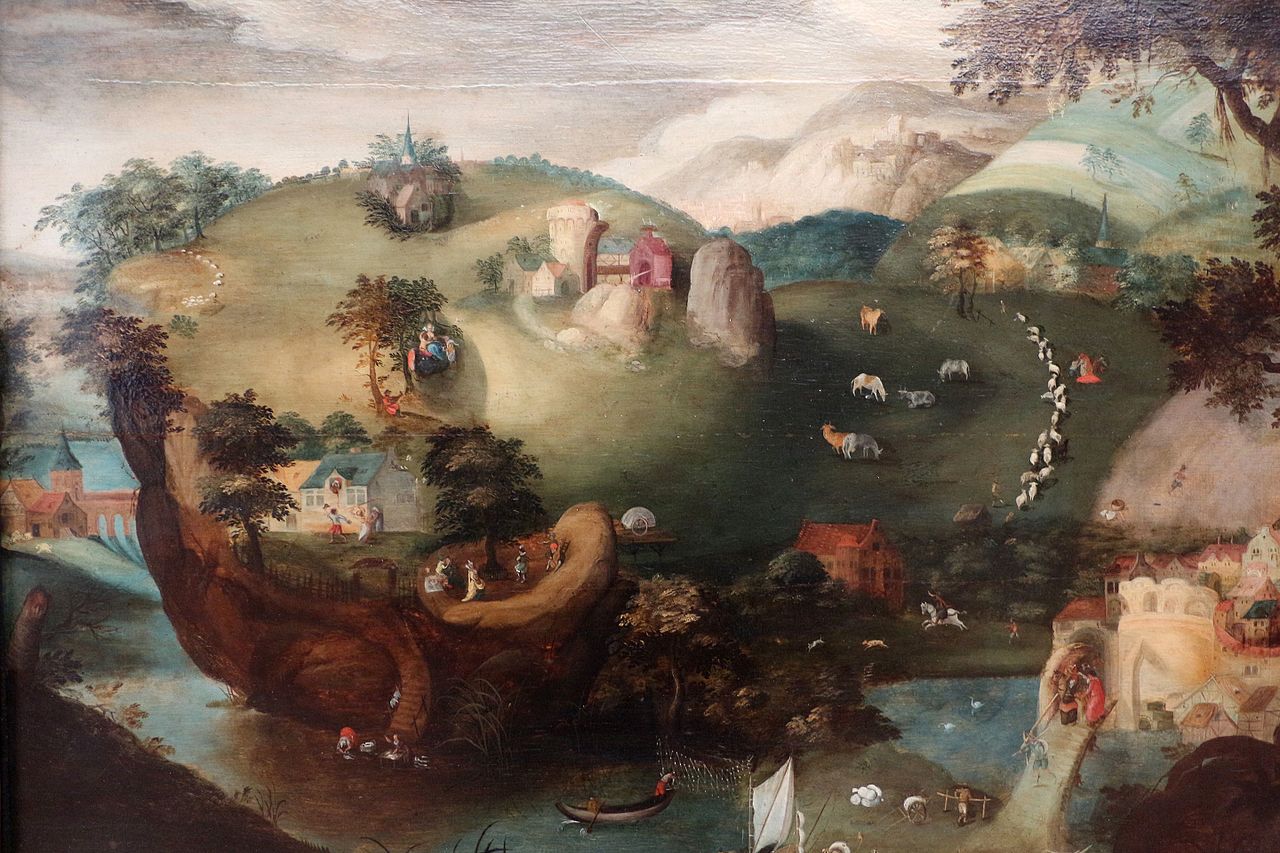

The Royal Museums of Fine Arts of Belgium hold two anthropomorphic landscapes painted in the 16th century, one masculine (above) and one feminine (below).
The artist is unknown.
The story goes that one day when Cézanne was picknicking in the country with some friends and a collector, the latter suddenly realized that he had dropped his overcoat somewhere on the way. Cézanne raked the landscape with his gaze, then exclaimed: ‘I’ll swear that black over there doesn’t belong to nature!’ Sure enough, it was the overcoat.
— André Malraux, The Voices of Silence, 1978
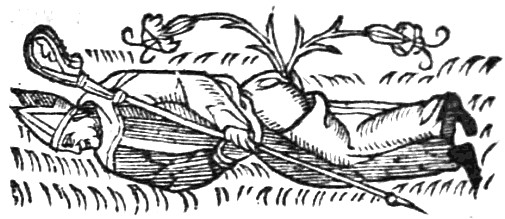
At Nuremburg a wolf’s tooth was shown to travellers … on which an Abbé is represented lying dead in a meadow, with three lilies growing out of his posteriors. This is not only the worst pun that ever was carved upon a wolf’s tooth, but the worst that ever was or will be made. The Abbé is designed to express the Latin word Habe. He is lying dead in a meadow, … mort en pré; this is for mortem præ; and the three lilies in his posteriors are to be read oculis, … au cu lis. Thus, according to the annexed explanation, the whole pun, rebus, or hieroglyphic, is Habe mortem præ oculis.
— Robert Southey, Omniana, 1812
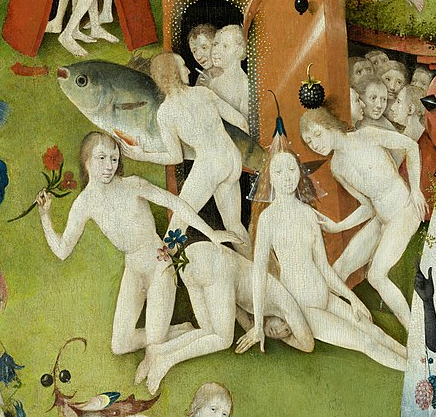
In other words, the French phrase Abbé mort en pré au cul lys (“Abbot died in a meadow with lilies in his rump”) sounds like the Latin phrase Habe mortem præ oculis (“Keep death before your eyes”). This joke appears to be referenced in Hieronymus Bosch’s 1504 triptych The Garden of Earthly Delights:
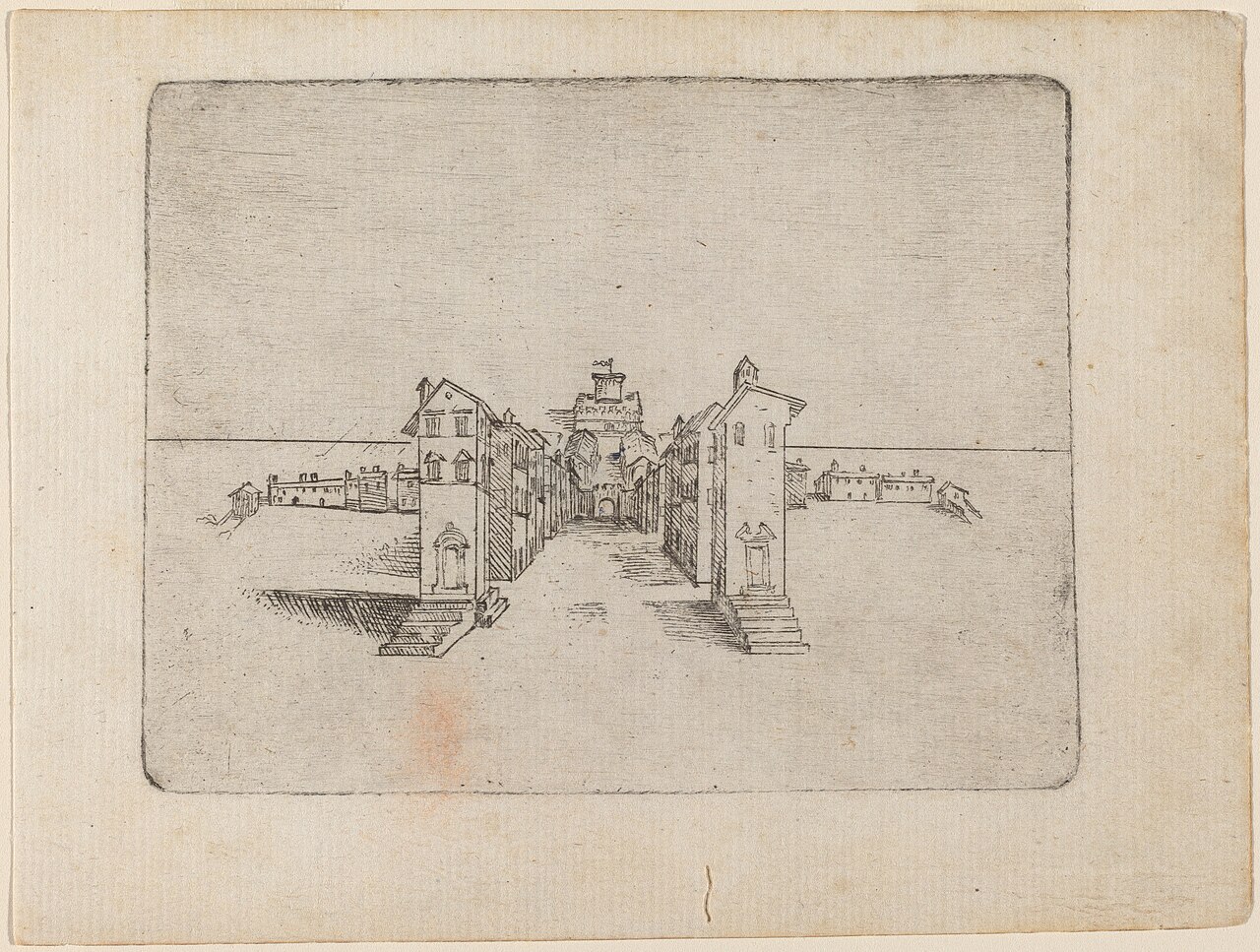
“Erotic Temple,” an etching from Giovanni Battista Bracelli’s Oddities of Various Figures, 1624.
From the National Gallery of Art.
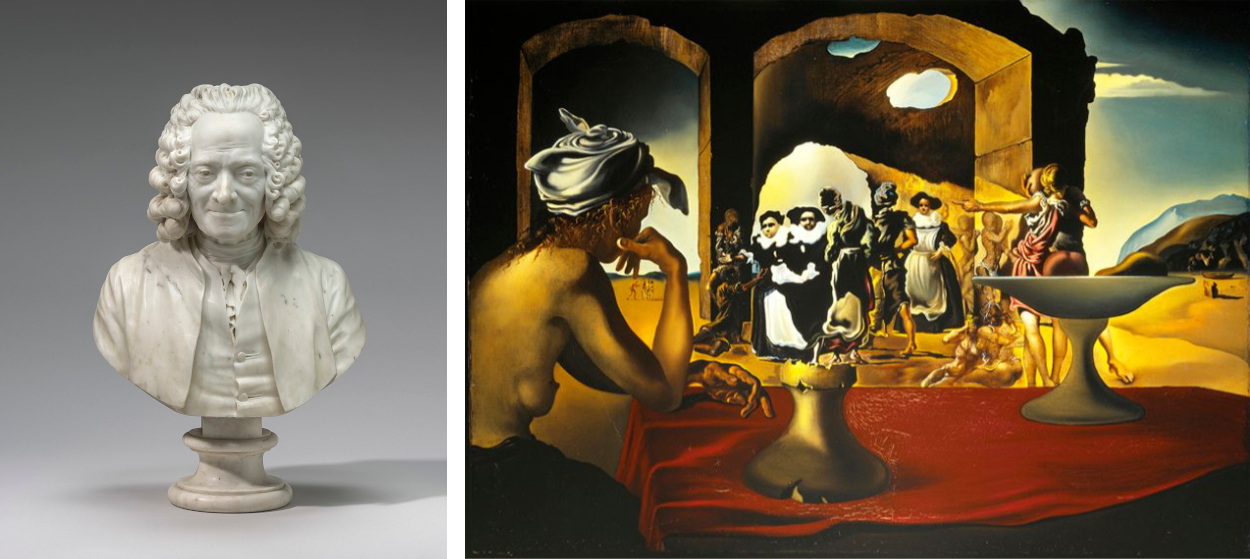
Jean-Antoine Houdon’s 1778 bust of Voltaire both does and doesn’t appear in Salvador Dalí’s 1940 painting Slave Market.
Dalí said his aim was “to make the abnormal look normal and the normal look abnormal.”
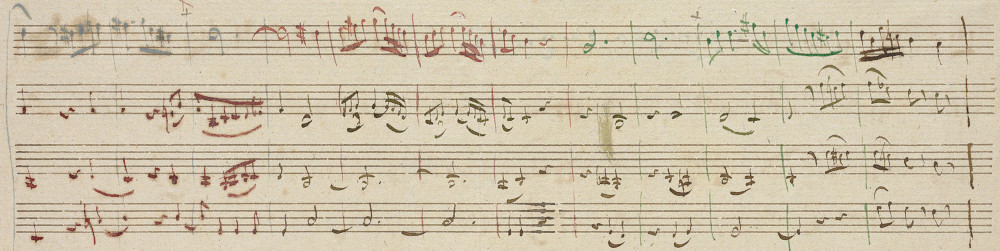
The manuscript for Mozart’s Horn Concerto No. 4 in E-Flat Major, K. 495, is written in inks of four colors, red, green, blue, and black.
It’s not clear why. Possibly the composer was teasing his friend Joseph Leutgeb, the intended performer. But possibly it’s a code meant to inform the performance.
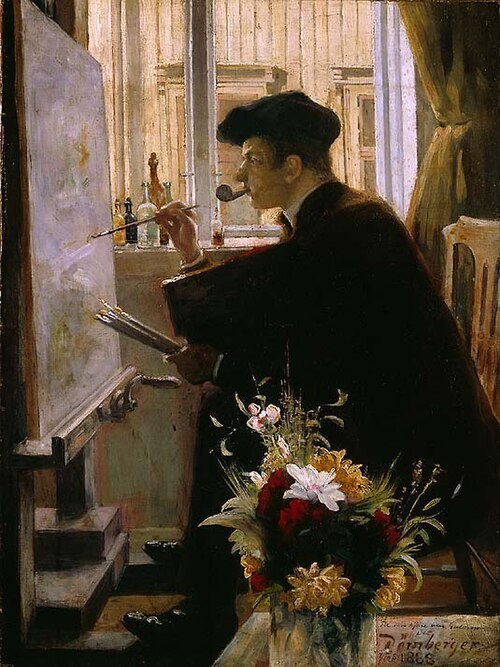
Robert Runcie, Archbishop of Canterbury, cooperated as Humphrey Carpenter prepared his biography, believing that the book wouldn’t be published until after his passing. Eventually he was forced to write,
My dear Humphrey
I have done my best to die before this book is published. It now seems possible that I may not succeed. Since you know that I am not enthusiastic about it you are generous to give me space for a postscript.
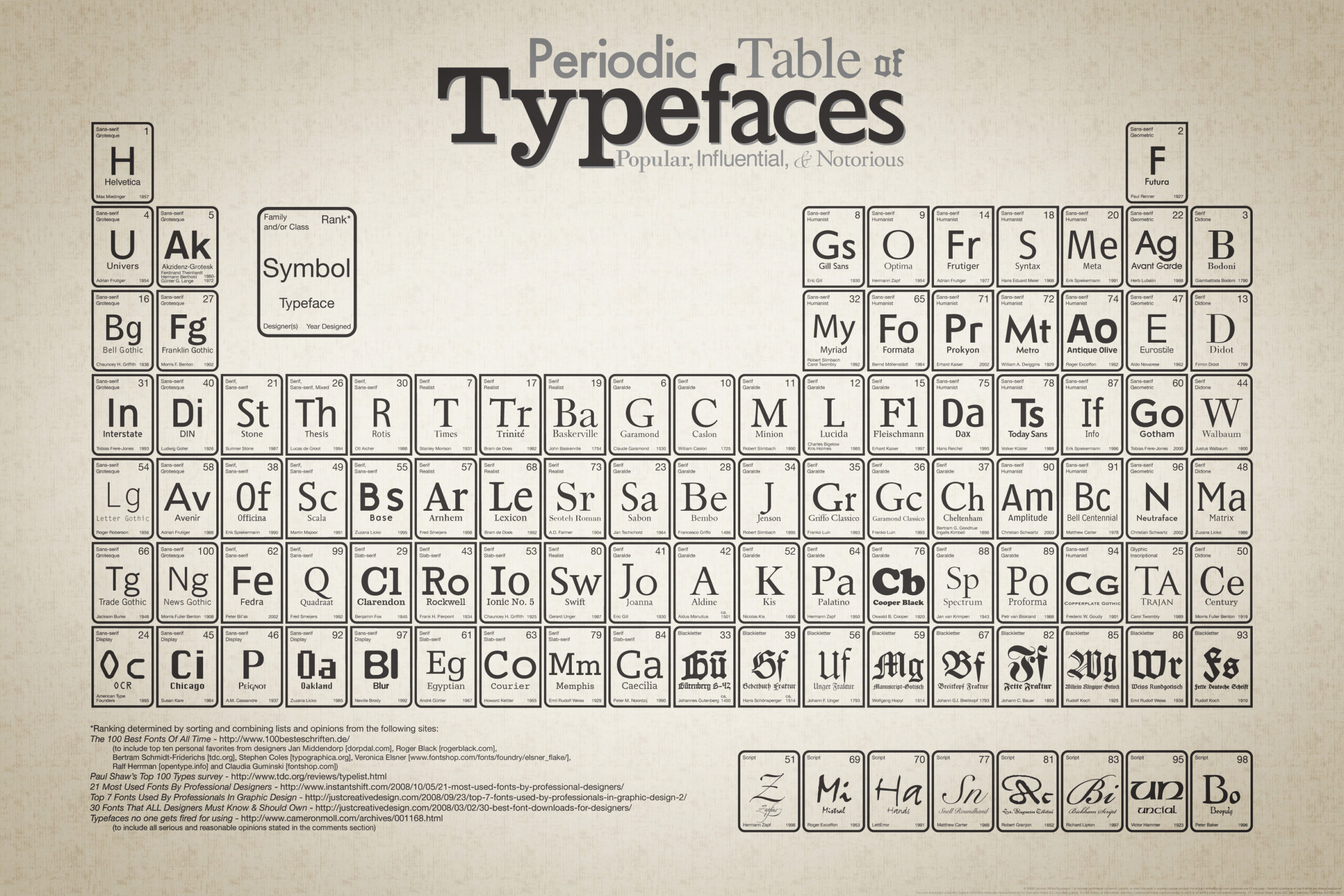
Designer Cam Wilde assembled this “periodic table of typefaces” by tabulating each face’s representation among a selected honor roll of great typefaces.
The “elements” are sorted numerically, and each is categorized as to family and class: sans-serif, serif, script, blackletter, glyphic, display, grotesque, realist, didone, garalde, geometric, humanist, slab-serif, and mixed. (Click to enlarge.)
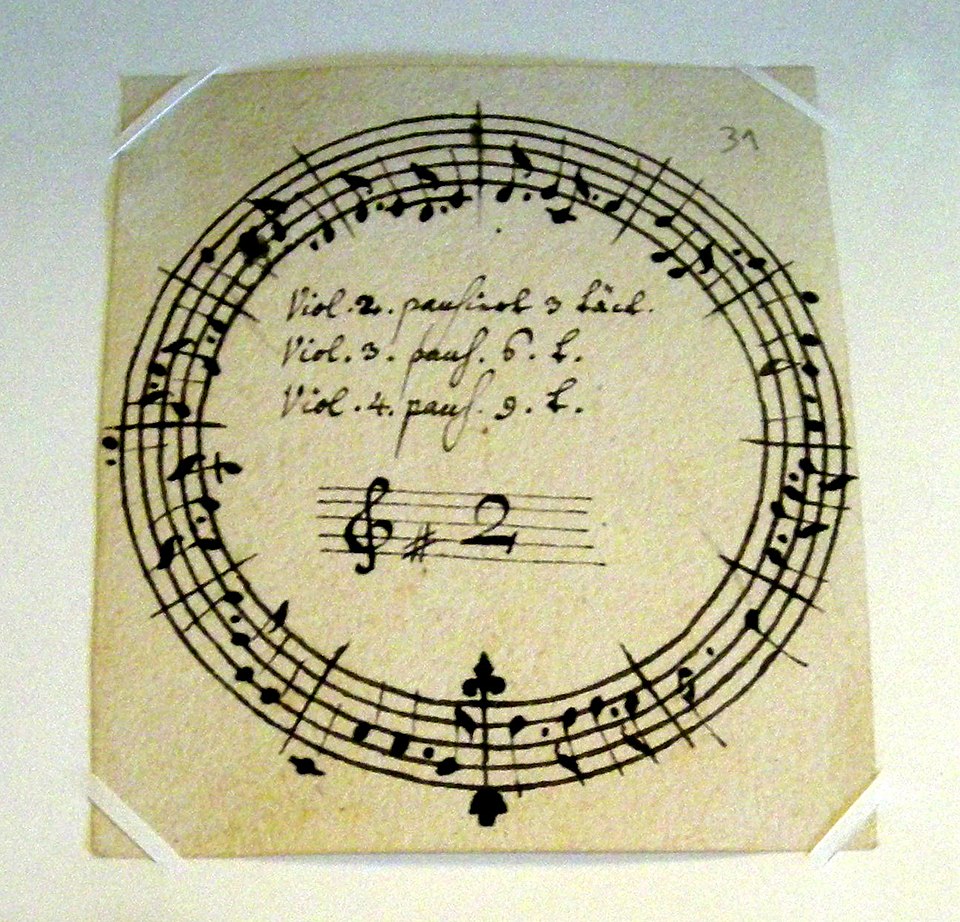
Alsatian pastor J.G. Stuber composed this puzzle canon in the late 18th century.
“It was always a great delight to me, in riding my horse from one village to another, to hear in the fields and among the heights the melodies which I had taught,” he wrote. “I could often distinguish very beautiful and harmonious voices.”
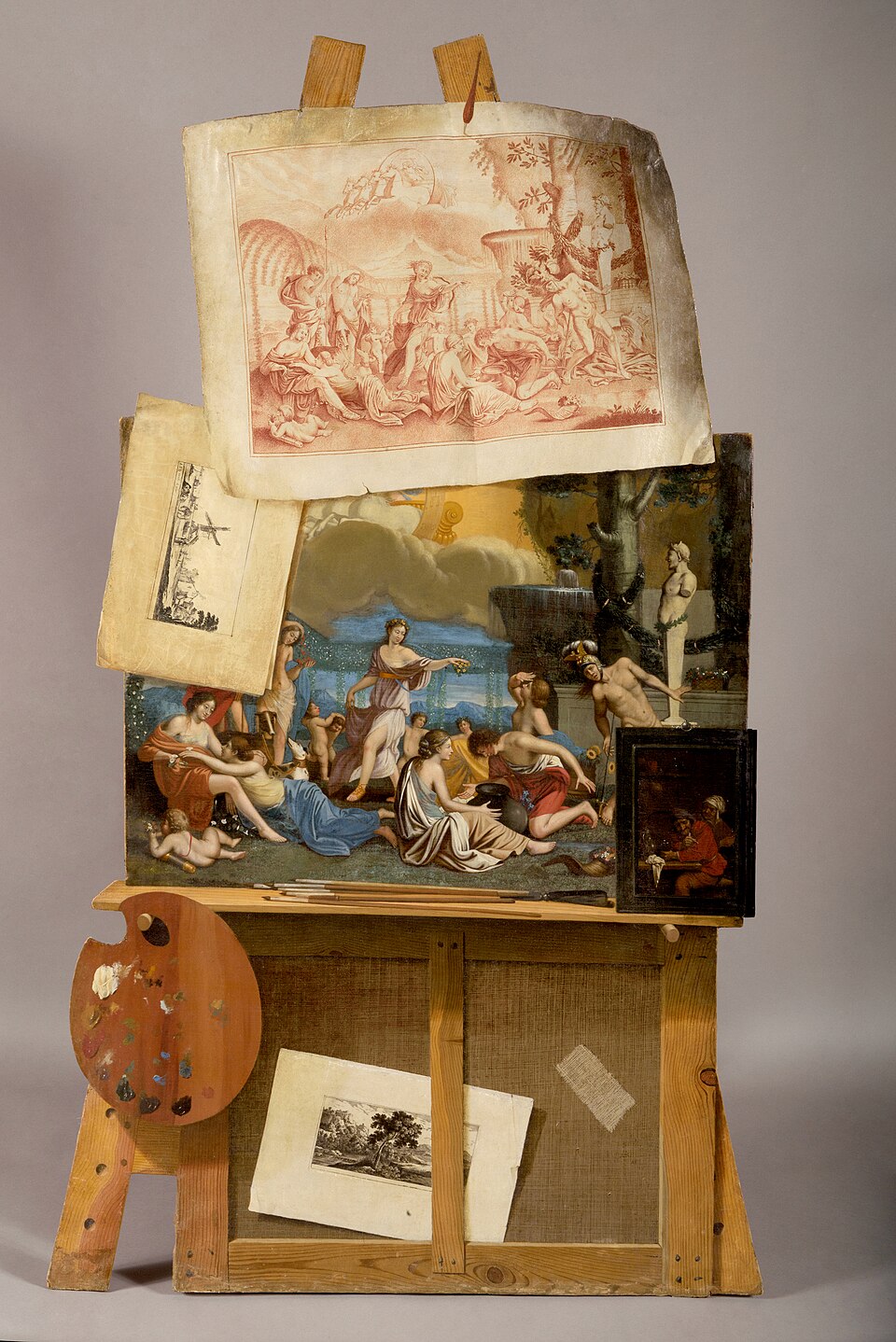
At the far end of the room was an easel on which lay a painting, not quite finished, depicting the Empire of Flora, the original of which was by Poussin. The painter’s palette and brushes were left beside the painting. Above it, on a piece of paper, was a red chalk drawing of the painting. … I examined all of this, both from afar and up close, without finding anything worth dwelling on; but my surprise was unparalleled when, upon trying to take the drawing, I discovered that it was all a fabrication, and that the whole thing was a single painting entirely in oil. … If I were in a position to possess this painting, I would gladly give ten thousand francs for it.
From Charles de Brosses, L’Italie il y a cent ans., 1836. The painting was Antoine Fort-Bras’ 1686 Le Chevalet du peintre, now at the Calvet Museum in Avignon. Flemish painter Cornelius Gijsbrechts had pulled the same trick a decade earlier.


