
musophobist
n. one who regards poetry with suspicious dislike
Language
A Hidden Message
Print our alphabet on a series of dials, like a combination lock, and you can arrange them to spell I GOT UP TO FAINT:

In a sense this sentence is latent in our alphabet; it’s an artifact of the customary order in which we list the letters.
Further hidden messages, for what they’re worth:
- AH ME, I AM A SERBIAN BOY!
- I AM A FRENCH VET; I RAP MY TIN BOX.
- OH, MY LAX FUR PEW! AS IF SHE LET ME BY A CROATIAN DAM.
In Carl Sagan’s 1985 novel Contact, an astronomer discovers that if pi is expressed in base 11, a field of 1s and 0s appears 1020 digits from the decimal point. If carriage returns are inserted at certain intervals, this field produces the image of a circle — apparently the signature of a designer who devised our mathematics itself. But even in the book, no one knows what this means.
In a Word
lychnobite
n. one who works at night and sleeps during the day
“Astral Aries’ Avatar”
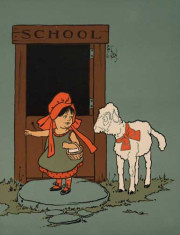
Mary had a little lamb, its fleece was white as snow,
And everywhere that Mary went the lamb was sure to go.
It followed her to school one day, which was against the rule;
It made the children laugh and play to see a lamb at school.
That rhyme has grown a bit boring — so Dave Morice has been spicing it up in Word Ways: The Journal of Recreational Linguistics. Samples:
Three-syllable words only, November 1998:
Marilyn’s ownership! Minuscule lambikin maximized fleeciness snowily.
Certainly everywhere Marilyn visited lambikin visited showily.
Yesterday lambikin, following Marilyn scholarly, misbehaved lawlessly.
Schoolfellows empathized laughingly, playfully, scholarly lambikin flawlessly.
Typed entirely with the left hand, August 1999:
Eva caged a wee, wee ewe, fat tresses wet as grass.
As Eva raced afar, ewe raced as far! Ewe was as crass.
Ewe started after Eva’s feet, faced ewe at fact cave.
Tads tagged, tads teased, tads raved at ewe, tads saw sweet treats ewe gave.
One long palindrome, November 1988:
Mary, baboon? To go to room? Gnu? Star? No, ’tis all lamb.
O, bit on stool, eh, Mary? Won sore heel? Sit! One rule, so:
No nose lure. No, ’tis Lee, hero, snowy ram. He loots not I, Bob.
Mall, la, sit on rat. Sung–“Moo rot! O, got no, O, baby ram!”
Rhopalic (words of increasing length), May 2000:
O, to own lamb, Mary’s little whitest creature,
Violating legalities, schoolmates interrupting
Schoolteacher entertainingly, disrespectfully,
Incontrovertibly counterproductive.
Semiprofessionally historicogeographic,
Superultrafrostified anticonstitutionalist,
Hyperconscientiousness anthropomorphologically,
Pathologicopsychological, philosophicopsychological.
And “The Lamb’s Viewpoint,” November 2006:
Lambie had a little girl, her hair was white as snow,
And everywhere that Lambie went, the girl was sure to go.
She followed him to graze one day; that was a real disaster.
It made the lambs all baa and bleat to see a girl in pasture.
In a Word
griffonage
n. careless handwriting
Of all editorial writers, Horace Greeley was most noted for illegible copy. On one occasion the ‘modern Franklin’ penned something about ‘Suburban journalism advancing,’ but the typesetter, thinking it one of his famous agricultural articles, launched out wildly with the words, ‘Superb Jerusalem artichokes.’ The stories of the wild work made by compositors with Mr. Greeley’s writing are endless, and probably most of them inventions; but the fiction cannot possibly outdo the reality. One of his editorial headings, ‘William H. Seward,’ was turned into ‘William the Third’; and the quotation from Shakespeare, ”Tis true, ’tis pity, and pity ’tis ’tis true,’ came out ”Tis two, ’tis fifty and fifty, ’tis fifty-two.’ That a sign-painter turned the placard ‘Entrance on Spruce’ to put up on the Nassau Street door during repairs, into ‘Editors on a Spree,’ is probably apocryphal; but the familiar legend that a discharged printer took his note of dismissal and used it for a letter of recommendation, securing a place on the strength of the signature, which was all anybody could read, is likely enough to have been true.
— Travelers’ Record, April 1889
See Pen Mystique.
Coming and Going
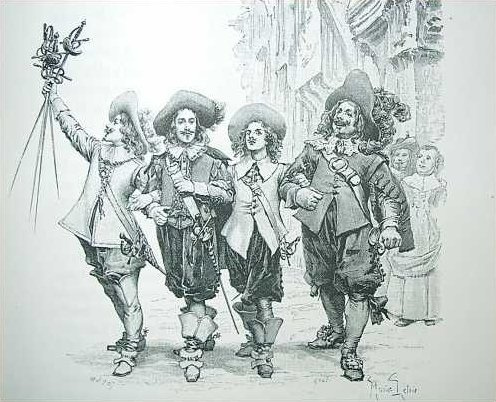
ALL FOR ONE AND ONE FOR ALL is a word-level palindrome.
So is the witches’ chant FAIR IS FOUL, AND FOUL IS FAIR in Macbeth.
Spoon Sweet
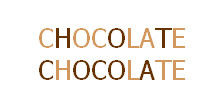
CHOCOLATE contains the words HOT COCOA, each in order.
In a Word
battology
n. tiresome repetition of words
macrology
n. much talk without substance
Ready Order
In the word ARCHETYPICAL, five letters occupy the same positions as in the alphabet — A is first, C third, E fifth, I ninth, and L twelfth.
In the remarkable sentence A bad egg hit KLM wipers two ways, composed by Ross Eckler, fully 16 of 26 letters occupy their alphabetic positions.
In a Word
rhyparographer
n. a painter of unpleasant or sordid subjects