An admirer once wrote to Rudyard Kipling: “I see you get a dollar a word for your writing. I enclose a check for one dollar. Please send me a sample.”
Kipling responded: “Thanks.”
An admirer once wrote to Rudyard Kipling: “I see you get a dollar a word for your writing. I enclose a check for one dollar. Please send me a sample.”
Kipling responded: “Thanks.”
What’s unusual about this nursery rhyme?
Old Mother Hubbard
Went to the cupboard
To get her poor dog a bone,
But when she got there
The cupboard was bare
And so her poor dog had none.
It’s 30 words long but does not contain the letter I.
See also Nevermore.
“Summer afternoon — summer afternoon; to me those have always been the two most beautiful words in the English language.” — Henry James

A “snowball sentence” contrived by Dmitri Borgmann — each word is one letter longer than the last:
I do not know where family doctors acquired illegibly perplexing handwriting; nevertheless, extraordinary pharmaceutical intellectuality, counterbalancing indecipherability, transcendentalizes intercommunications’ incomprehensibleness.
Does any English word contain all six vowels?
Unquestionably.
You say that you have a dog.
Yes, and a villain of a one, said Ctesippus.
And he has puppies?
Yes, and they are very like himself.
And the dog is the father of them?
Yes, he said, I certainly saw him and the mother of the puppies come together.
And is he not yours?
To be sure he is.
Then he is a father, and he is yours; ergo he is your father, and the puppies are your brothers.
Let me ask you one little question more, said Dionysodorus, quickly interposing, in order that Ctesippus might not get in his word: You beat this dog?
Ctesippus said, laughing: Indeed I do; and I only wish that I could beat you instead of him.
Then you beat your father, he said.
— Plato, Euthydemus

“The Hartford Times tells a curious story of a flock of crows in that vicinity who recently lost their way in a fog. They lost their bearings at a point directly above the South Green, in Hartford. For a good while they hovered there, coming low down, circling and diving aimlessly about, like a blindfolded person in ‘blind man’s buff,’ and keeping up a hoarse cawing and general racket beyond description. It was plain enough that of the entire company each individual crow was not only puzzled and bothered, but highly indignant, and inclined to utter ‘cuss words’ in his frantic attempts to be heard above the general din, and tell the others which way to go. Once or twice the whole flock swept down to a distance of not more than one hundred feet above the street. Finally, after going around for many times, they saied away in a southerly direction, evidently having got some clue to the way out of the fog, or desperately resolved to go somewhere till they could see daylight.”
— Frank H. Stauffer, The Queer, the Quaint and the Quizzical, 1882

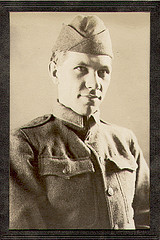
Catcher Moe Berg earned his reputation as “the brainiest guy in baseball.” At Princeton, where he studied seven languages, he communicated plays in Latin with the second baseman, and he later attended Columbia Law School and the Sorbonne while reading 10 newspapers a day. After 15 undistinguished seasons as a ballplayer, he went to work as a spy during World War II, parachuting into Yugoslavia for the Office of Strategic Services and interviewing Italian physicists about the German nuclear program. (He chose not to shoot Werner Heisenberg.) His is the only baseball card on display at CIA headquarters.
Berg was awarded the Presidential Medal of Freedom in 1945, but he spent the last 20 years of his life living quietly with siblings. He declined to write a memoir, so much of his life is still a mystery. When asked why he had “wasted” his intellectual gifts on baseball, he said, “I’d rather be a ballplayer than a justice on the U.S. Supreme Court.” His final words were “How did the Mets do today?”
In this sentence there are sixteen words, eighty-one letters, one hyphen, four commas, and one period.

The following message was composed for Bizarre Notes and Queries, July-August 1890, to show “that it would be possible to write a technically grammatical sentence, which would be almost unintelligible.” “The words below can all be found in the dictionary, and all are grammatically used: and yet the thing is as hopelessly dark as if written in Cherokee.” It purports to be a note from an author to a critic:
Sir:– You have behaved like an impetiginous-Croyle! like those inquinate, Crass-sciolists who envious of my moral celsitude, carry their nugacity to the height of creating symposically the facund words which my polymathic genius uses with uberty to abligate the tongues of the weetless! Sir–you have crassly parodied my own pet words, as though they were tangrams. I will not coacervate reproaches–I would abduce a veil over the atramental ingratitude which has chamferred even my undicerptible heart. I am silent on the foscillation, which my coadjivancy must have given you when I offered to become your fautor and admincle. I will not speak of the lippitude, the ablepsy, you have shown in exacerbating me–one whose genius you should have approached with mental discalceation. So I tell you sir syncophically, and without supervaceneous words, nothing will render ignoscible your conduct to me. I warn you that I would vellicate your nose, if I thought that any moral diathrosis could be thereby performed–if I thought that I should not impignorate my reputation by such a digtadiation.
“For an entire solution of the above highly interesting missive, the reader is invited to amuse himself an hour or two with Walker’s or Webster’s Unabridged.”