
“See what will happen if you don’t stop biting your fingernails?” — Will Rogers, to his niece on seeing the Venus de Milo
Art
Shades of Gray
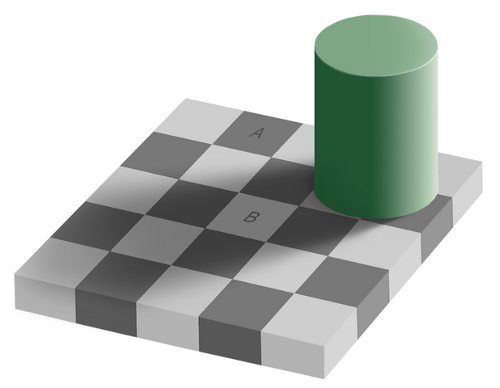
An optical illusion. Squares A and B are the same color.
“The Librarian”
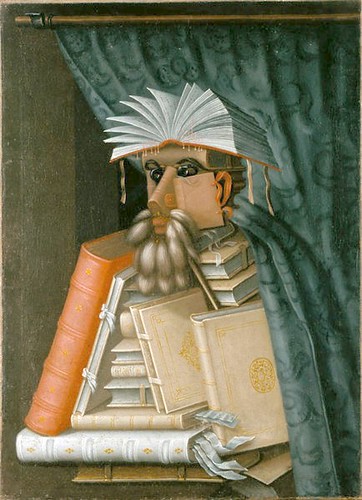
Giuseppe Arcimboldo‘s caricature of Rudolf II’s historiographer and librarian, Wolfgang Lazio (1514-1565) — a collector of coins and a lover of books.
Fleeting Beauty
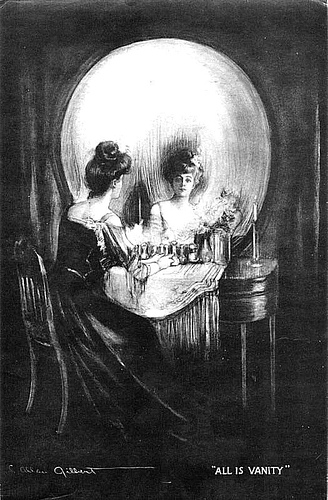
“All Is Vanity” (1892), by the American illustrator C. Allan Gilbert.
Back up to get the full effect.
All Art Is Theft
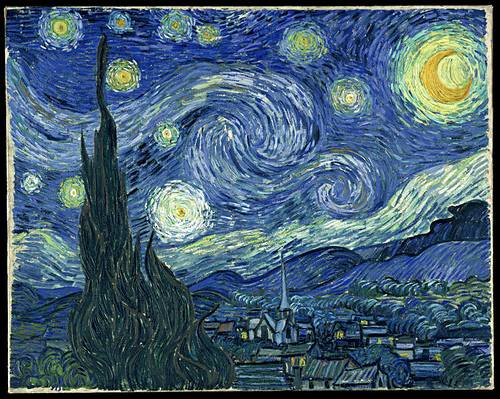
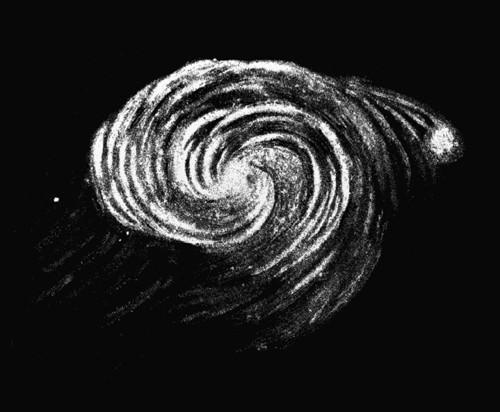
Irish astronomer William Parsons might have been surprised to see van Gogh’s The Starry Night appear in 1889.
He had drawn this sketch of the Whirlpool Galaxy 44 years earlier:
Trompe L’Oeil
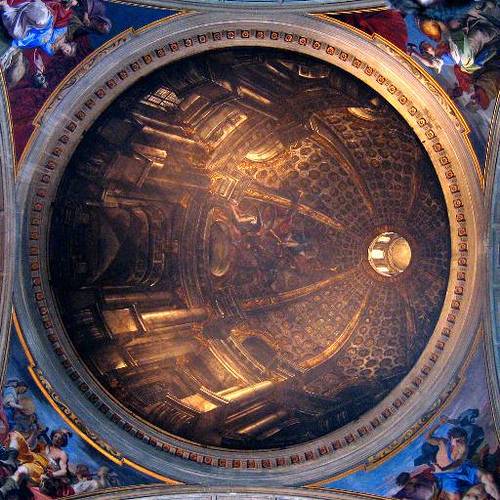

Designers wanted to put a dome on Rome’s Sant’Ignazio church, but neighbors complained of the shadow. So, instead, artist Andrea Pozzo painted this design on the flat ceiling.
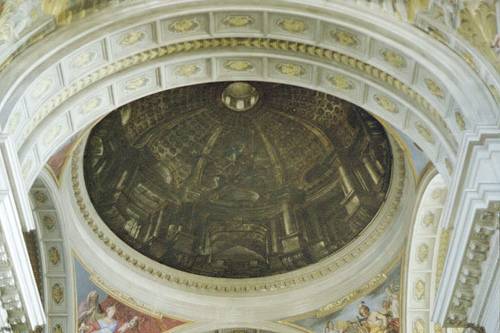
When it’s viewed from the side (below), the church gets its dome after all.

Unfinished
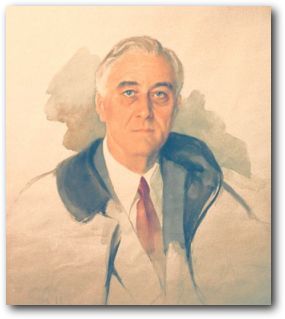
Artist Elizabeth Shoumatoff commenced an oil portrait of Franklin Roosevelt at noon on April 12, 1945.
This is as far as she got. FDR was being served lunch when he said, “I have a terrific headache” — and collapsed of a massive cerebral hemorrhage.
But the Rent’s Great
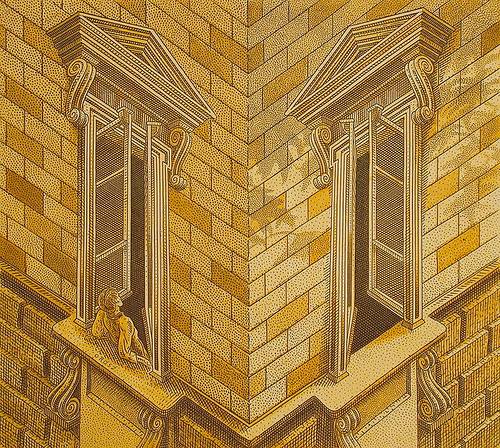

“Corner House,” by Hungarian painter István Orosz (b. 1951).
“Illusion,” wrote Oscar Wilde, “is the first of all pleasures.”
Renaissance Surrealism
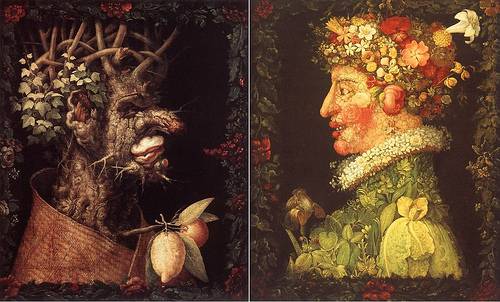
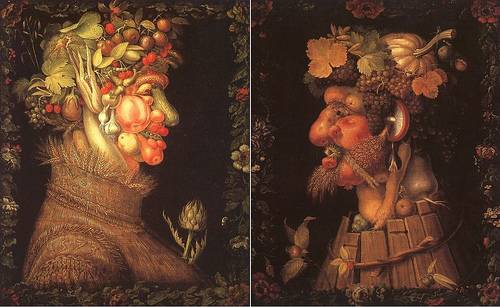
There’s no mistaking a portrait by Giuseppe Arcimboldo — the Milanese painter represented his subjects as masses of flowers, vegetables, fruits, and fish. These personifications of the four seasons were composed between 1563 and 1573.
An Early Escher
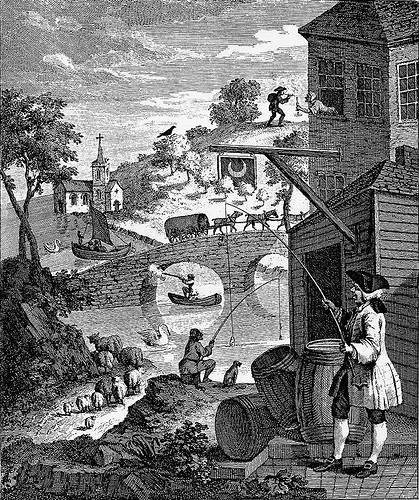
“False Perspective,” a 1754 engraving by William Hogarth.
“Whoever makes a DESIGN without the Knowledge of PERSPECTIVE,” he wrote, “will be liable to such Absurdities as are shewn in this Frontispiece.”