
“He who knows only his own side of the case knows little of that.” — John Stuart Mill
Quotations
Unquote
“Perchance the best chance of reproducing the ancient Greek temperament would be to cross the Scots with the Chinese.” — Hugh McDiarmid
Jam Tomorrow
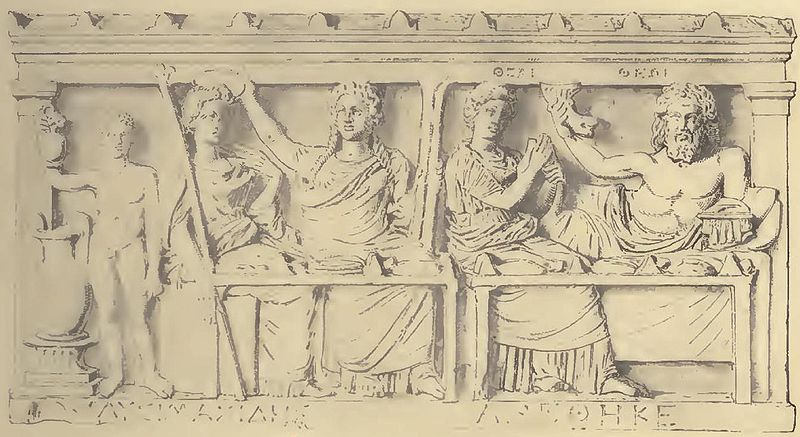
“The usual Attic dinner consisted of two courses, the first a kind of porridge, and the second a kind of porridge.” — Alfred Zimmern
Insight
Advice in problem solving:
“You must always invert.” — Carl Gustav Jacob Jacobi
“Whenever you can, count.” — Francis Galton
“Each problem that I solved became a rule, which served afterwards to solve other problems.” — Descartes
“By studying the masters, not their pupils.” — Niels Henrik Abel
“Truth is the offspring of silence and meditation. I keep the subject constantly before me and wait ’til the first dawnings open slowly, by little and little, into a full and clear light.” — Isaac Newton
Unquote
“My own opinion is that belief is the death of intelligence. As soon as one believes a doctrine of any sort, or assumes certitude, one stops thinking about that aspect of existence. The more certitude one assumes, the less there is left to think about, and a person sure of everything would never have any need to think about anything and might be considered clinically dead under current medical standards, where the absence of brain activity is taken to mean that life has ended.” — Robert Anton Wilson
Unquote
“I have always been of the opinion that unpopularity earned by doing what is right is not unpopularity at all but glory.” — Cicero
Stoicisms
_01.jpg)
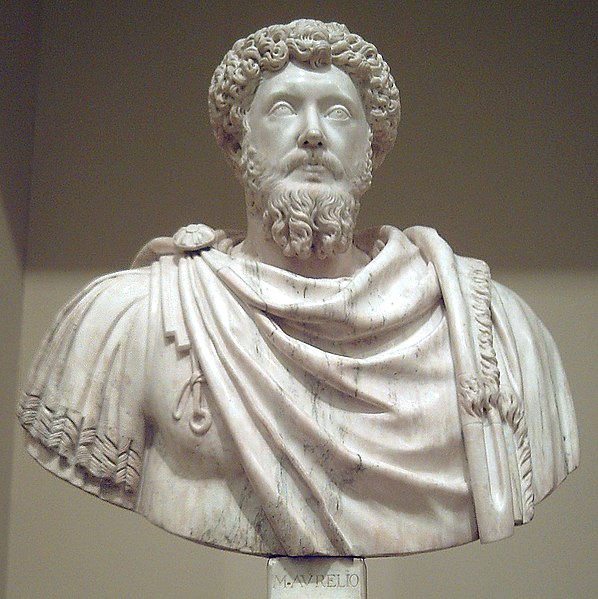
Meditations of Marcus Aurelius:
- “I am constantly amazed by how easily we love ourselves above all others, yet we put more stock in the opinions of others than in our own estimation of self. … How much credence we give to the opinions our peers have of us and how little to our very own!”
- “Drama, combat, terror, numbness, and subservience — every day these things wipe out your sacred principles, whenever your mind entertains them uncritically or lets them slip in.”
- “A cucumber is bitter. Throw it away. There are briars in the road. Turn aside from them. This is enough. Do not add, ‘And why were such things made in the world?'”
- “Do not then consider life a thing of any value. For look at the immensity of time behind thee, and to the time which is before thee, another boundless space. In this infinity then what is the difference between him who lives three days and him who lives three generations?”
- “I, who have never wilfully pained another, have no business to pain myself.”
- “He who fears death either fears to lose all sensation or fears new sensations. In reality, you will either feel nothing at all, and therefore nothing evil, or else, if you can feel any new sensations, you will be a new creature, and so will not have ceased to have life.”
- “First get at the nature and quality of the original cause, separate it from the material to which it has given shape, and study it; then determine the possible duration of its effects.”
- “Take it that you have died today, and your life’s story is ended; and henceforward regard what further time may be given you as an uncovenanted surplus, and live it out in harmony with nature.”
- “To pursue the unattainable is insanity, yet the thoughtless can never refrain from doing so.”
“The woes you have had to bear are numberless because you were not content to let Reason, your guide and master, do its natural work. Come now, no more of this!”
Illumination

In a monastery cloisters on the edge of Venice is a sundial inscribed with the motto Horas non numero nisi serenas.
Literally that means “I don’t count the hours unless they are serene ones” (or “I count only the sunny hours”).
“But it really means, ‘When I come to die, the only moments that matter will have been the moments when I was at ease,'” writes Harry Mount in Amo, Amas, Amat and All That.
Of the motto, William Hazlitt wrote, “There is a softness and a harmony in the words and in the thought unparalleled.”
The Robben Island Notebooks
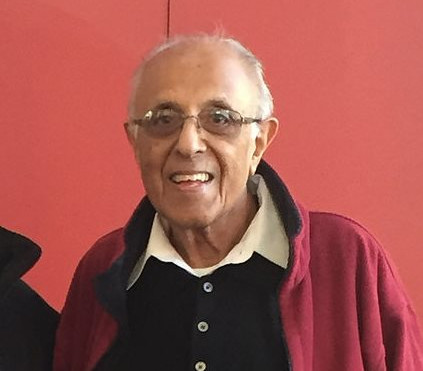
Sentenced in 1964 to life in prison, anti-apartheid activist Ahmed Kathrada got permission during his confinement to pursue a history degree through the University of South Africa. He used his access to books and writing materials to compile a series of secret notebooks in which he recorded quotations that inspired him. Together they form what used to be called a commonplace book — a series of personal memoranda that, taken together, illuminate the spirit of the compiler:
Ofttimes the test of courage becomes rather to live than to die. — Vittorio Alfieri
It is almost a definition of a gentleman to say he is one who never inflicts pain. — Cardinal Newman, The Idea of a University Defined (1873)
One owes respect to the living; but to the dead one owes nothing but the truth. — Voltaire
The triumph of wicked men is always short-lived. — Honore de Balzac, The Black Sheep
(Form of oath-taking among Shoshone Indians is:) The earth hears me. The sun hears me. Shall I lie?
Conrad wrote that life sometimes made him feel like a cornered rat waiting to be clubbed.
Nobody knows what kind of government it is who has never been in prison. — Leo Tolstoy
Leve fit, quod bene fertur onus. (A burden becomes lightest when it is well borne.)
To secure ourselves against defeat lies in our own hands, but the opportunity of defeating the enemy is provided by the enemy himself. — Sun Tzu
Verba volant, scripta manent. (The spoken word flees; the written word remains.) — Ancient Roman adage
(Peter Ustinov explains why he reads so much:) “If you’re going to be the prisoner of your own mind, the least you can do is to make sure it’s well furnished.”
To be without some of the things you want is an indispensable part of happiness. — Bertrand Russell
Altogether “Kathy” compiled seven notebooks over 26 years, drawing not just on his study materials and smuggled newspapers but on 5,000 books donated to the prison library by a Cape Town bookstore. Finally released in 1989, he went on to become a member of Parliament after South Africa’s first democratic elections in 1994 and served as President Nelson Mandela’s parliamentary counsellor until 1999.
One of his former warders, Christo Brand, told him, “I was supposed to be your master, but instead you became my mentor.”
(Sahm Venter, ed., Ahmed Kathrada’s Notebook From Robben Island, 2005.)
Misc
- Thomas Jefferson, John Adams, and James Monroe all died on July 4.
- Australia is wider than the moon.
- NoNRePReSeNTaTiONaLiSm can be assembled from chemical symbols.
- 1 × 56 – 1 – 7 = 15617
- “‘Needless to say’ is, needless to say, needless to say.” — Enoch Haga