“I knew it. I knew it. Born in a hotel room and, goddammit, died in a hotel room.”
— Eugene O’Neill’s last words

“I knew it. I knew it. Born in a hotel room and, goddammit, died in a hotel room.”
— Eugene O’Neill’s last words
In December 1976, the television program The Six Million Dollar Man was shooting an episode at California’s Long Beach Pike amusement park when a crew member discovered a wax dummy hanging in a funhouse gallows. When he tried to move it, its arm broke off — it wasn’t a dummy, but in fact a mummified human body. Stranger still, its mouth contained a 1924 penny and a ticket from the Museum of Crime in Los Angeles.
After much investigation, it turned out to be the body of Elmer McCurdy, an inept outlaw who had been killed in an Oklahoma gunfight in 1911. When no one claimed his body, an unscrupulous undertaker had embalmed it and charged a nickel to see “The Bandit Who Wouldn’t Give Up,” and for 60 years thereafter McCurdy’s corpse was traded among wax museums, carnivals, and haunted houses.
Elmer was finally buried, fittingly, in the Boot Hill section of Oklahoma’s Summit View Cemetery under two cubic yards of concrete. Ironically, his last words had been “You’ll never take me alive!”

In the beginning of September 1792, a paragraph appeared in several newspapers, mentioning that a hawk had been found at the Cape of Good Hope, and brought from thence by one of the India ships, having on its neck a gold collar, on which were engraven the following words:
“This goodlie Hawk doth belong to his Most Excellent Majestie, James Kinge of England, A.D. 1610.”
— Kirby’s Wonderful and Scientific Museum, 1820
A panic terror of the end of the world seized the good people of Leeds and its neighborhood in the year 1806. It arose from the following circumstances. A hen, in a village close by, laid eggs, on which were inscribed the words, “Christ is coming.” Great numbers visited the spot, and examined these wondrous eggs, convinced that the day of judgment was near at hand. Like sailors in a storm, expecting every instant to go to the bottom, the believers suddenly became religious, prayed violently, and flattered themselves that they repented them of their evil courses. But a plain tale soon put them down, and quenched their religion entirely. Some gentlemen, hearing of the matter, went one fine morning and caught the poor hen in the act of laying one of her miraculous eggs. They soon ascertained beyond doubt that the egg had been inscribed with some corrosive ink, and cruelly forced up again into the bird’s body. At this explanation, those who had prayed, now laughed, and the world wagged as merrily as of yore.
— Edmund Fillingham King, Ten Thousand Wonderful Things, 1860
Composer Arnold Schoenberg was fascinated with numerology. Born on Sept. 13, he came to fear that he would die at age 76, because its digits add to 13. He examined a calendar for 1951 and was dismayed to see that July 13 fell on a Friday. When the fateful day came he took to his bed, fearing the worst. The day passed uneventfully, and shortly before midnight his wife entered the bedroom to say goodnight. Schoenberg uttered the word “harmony” and died.
The time of his death was 11:47 p.m., 13 minutes before midnight on Friday, July 13, in his 76th year.
From Charles Bombaugh, Facts and Fancies for the Curious From the Harvest-Fields of Literature, 1905:
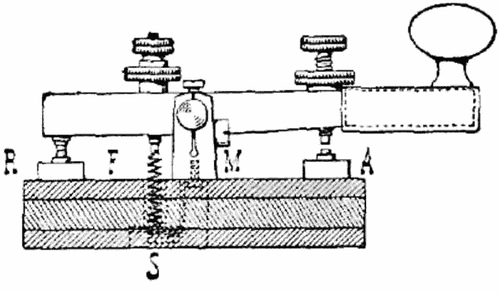
The following sentence won a prize offered in England for the longest twelve-word telegram:
ADMINISTRATOR-GENERAL’S COUNTER-REVOLUTIONARY INTERCOMMUNICATIONS UNCIRCUMSTANTIATED. QUARTERMASTER-GENERAL’S DISPROPORTIONABLENESS CHARACTERISTICALLY CONTRA-DISTINGUISHED UNCONSTITUTIONALIST’S INCOMPREHENSIBILITIES.
It is said that the telegraph authorities accepted it as a dispatch of twelve words.
In 1969, French author Georges Perec wrote a 300-page novel without the letter e:
Noon rings out. A wasp, making an ominous sound, a sound akin to a klaxon or a tocsin, flits about. Augustus, who has had a bad night, sits up blinking and purblind. Oh what was that word (is his thought) that ran through my brain all night, that idiotic word that, hard as I’d try to pin it down, was always just an inch or two out of my grasp — fowl or foul or Vow or Voyal? — a word which, by association, brought into play an incongruous mass and magma of nouns, idioms, slogans and sayings, a confusing, amorphous outpouring which I sought in vain to control or turn off but which wound around my mind a whirlwind of a cord, a whiplash of a cord, a cord that would split again and again, would knit again and again, of words without communication or any possibility of combination, words without pronunciation, signification or transcription but out of which, notwithstanding, was brought forth a flux, a continuous, compact and lucid flow: an intuition, a vacillating frisson of illumination as if caught in a flash of lightning or in a mist abruptly rising to unshroud an obvious sign — but a sign, alas, that would last an instant only to vanish for good.
Remarkably, La Disparition has been translated into six different languages, each imposing a similar constraint — the Spanish, for instance, contains no a, and the English, here, no e.
In 1996 recreational linguist Ross Eckler composed the following “transdeletion pyramid”:
A N T I C E R E M O N I A L I S T
N O N M A T E R I A L I T I E S
O R N A M E N T A L I T I E S
I N T E R L A M I N A T E S
M A T E R N A L I T I E S
M A T R I L I N E A T E
T R I L A M I N A T E
T E R M I N A L I A
L A T I M E R I A
M A T E R I A L
T A L I E R A
R E T A I L
A L T E R
R A T E
T E A
A T
A
Each word is derived from the one above, dropping one letter and scrambling the rest.
One last unlucky elephant. In the early 1900s, Thomas Edison was locked in a historic “war of currents” with George Westinghouse. Edison wanted the nation to use direct current; Westinghouse and Nikola Tesla wanted alternating current.
That sounds like a pretty tame dispute, but Edison went to some horrific lengths to sway public opinion. To prove that AC was dangerous, he began electrocuting stray cats and dogs. He said they were being “Westinghoused.” He also secretly funded the first electric chair, which ran on AC but was underpowered — its first use resulted in “an awful spectacle, far worse than hanging,” in the words of one witness.
Anyway, around this time a Coney Island elephant named Topsy was condemned to death for killing three men in three years. Hanging was out, thanks to the ASPCA, so Edison suggested they send 6,600 volts of AC through her. So on Jan. 4, 1903, 1,500 people gathered at the amusement park and watched as Topsy ate carrots laced with 460 grams of potassium cyanide and was Westinghoused. She died quickly, reportedly, but Edison recorded the whole thing on film, and later played Electrocuting an Elephant to audiences around the country.
He lost the fight for DC power, though. There’s some justice.
A aptronym is a name that is aptly suited to its owner’s occupation. Examples:
And Joe Strummer, guitarist for The Clash.