39,402,191,713 is prime, and replacing all three instances of 1 with any other (particular) digit produces another prime.
Noted in an old MIT Technology Review.

39,402,191,713 is prime, and replacing all three instances of 1 with any other (particular) digit produces another prime.
Noted in an old MIT Technology Review.

In 1998, as aerospace engineer Homer Hickam’s memoir Rocket Boys was being adapted for the screen, Universal Studios’ research warned that women over 30 would not see a movie with that title.
So the name was changed to October Sky — the same 10 letters in a different order.

A wazir is a fanciful chess piece that can move one square horizontally or vertically, but not diagonally. This one finds itself in the upper left corner of the board. Can it make its way to the lower right while visiting each square exactly once?
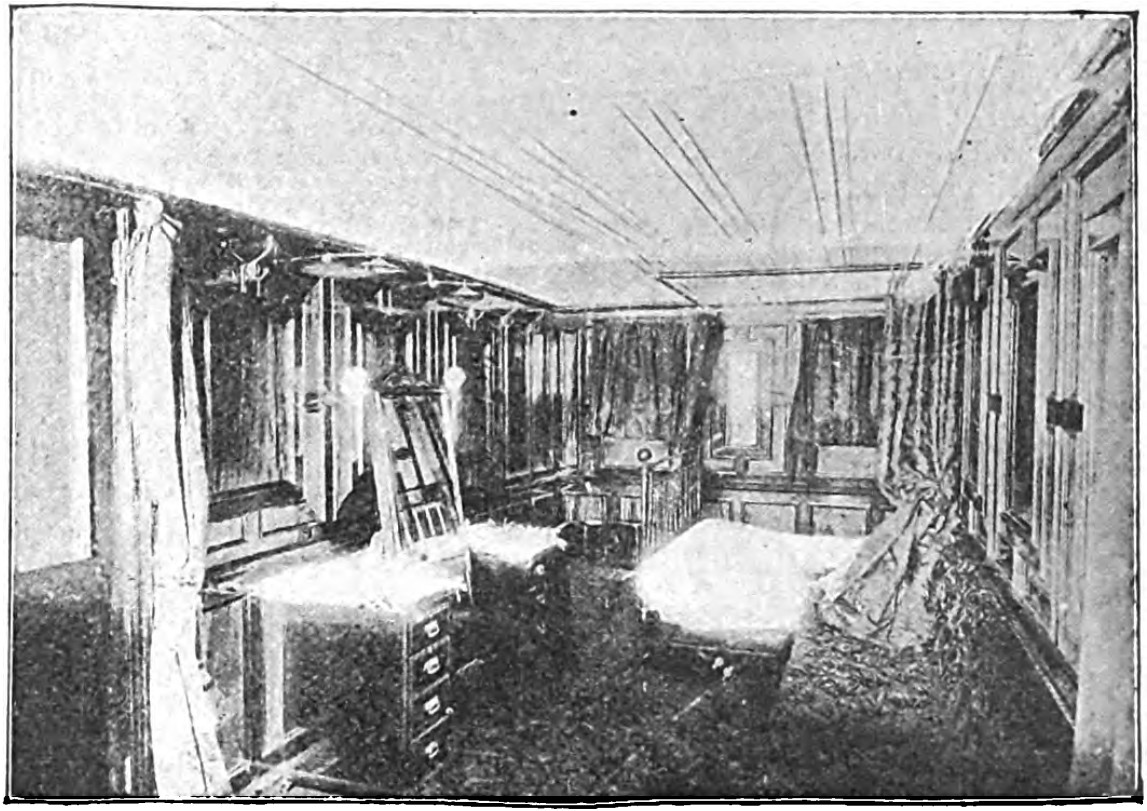
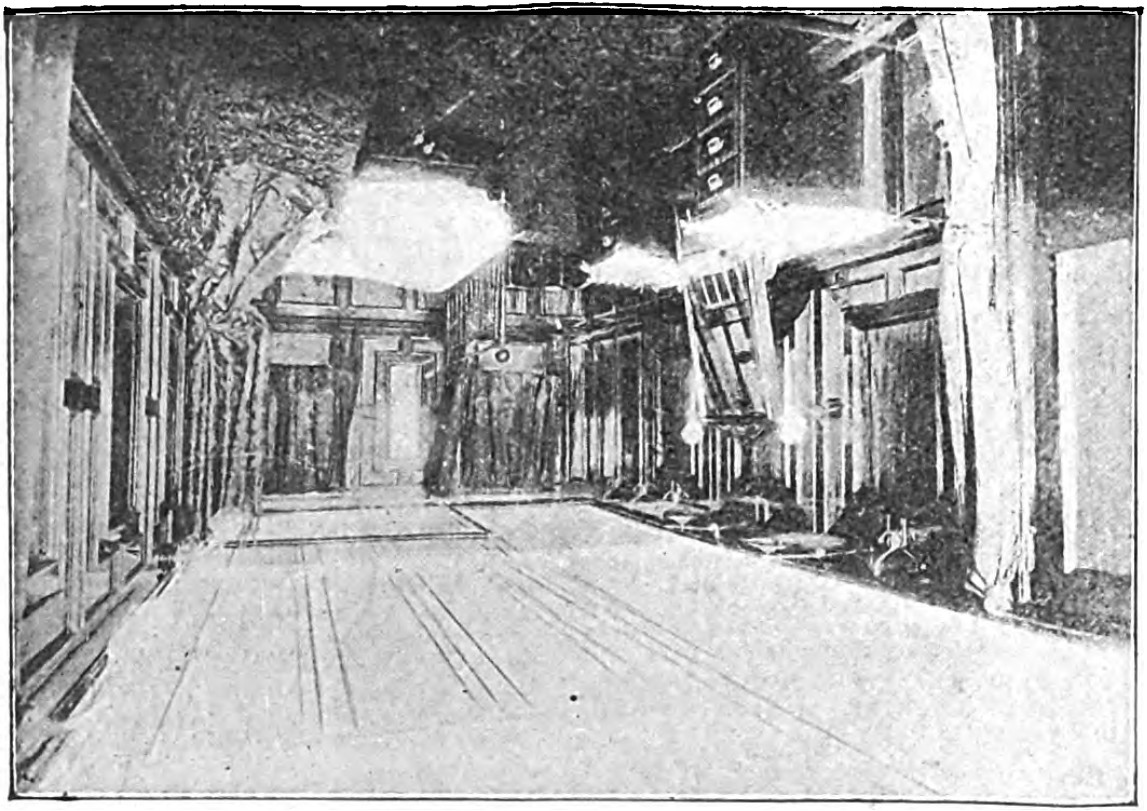
From the Strand, April 1903:
This photo is of a cabin on one of the Flushing Line steamers. It has the peculiarity that, while showing a small room (cabin), on looking at it upside down [below] it gives an excellent representation of a very large room, which can be likened to a ball-room, with on right-hand side a doorway, large open fireplace, pictures, windows, etc., on left-hand a series of pictures and windows, with doorway at far end. — George A. Goodwin, 28, Victoria Street, S.W.
On Jan. 30, 1874, Tamil poet Ramalinga Swamigal entered his one-room home in Chennai and directed his followers to lock the door from the outside. If the door were forced open, he said, nothing would be found inside.
In May the government forced open the door. The room was empty. The disappearance has never been explained.

I used to like to hear him admire the beauty of a flower; it was a kind of gratitude to the flower itself, and a personal love for its delicate form and colour. I seem to remember him gently touching a flower he delighted in; it was the same simple admiration that a child might have.
— Francis Darwin, of his father
In 2014, three truck drivers sued Oakhurst Dairy of Portland, Maine, alleging that they’d been unfairly denied four years’ worth of overtime pay. Maine law generally required time-and-a-half pay for each hour worked above 40 hours, but it listed exemptions for:
The canning, processing, preserving, freezing, drying, marketing, storing, packing for shipment or distribution of:
(1) Agricultural produce;
(2) Meat and fish products; and
(3) Perishable foods.
That’s not quite clear. Does the law exempt the distribution of the three categories listed, or does it exempt packing for shipment or distribution of them? The confusion shows the value of the so-called Oxford comma, the often-skipped comma that follows the next-to-last item in a series, as in “A, B, and C.” A comma after “shipment” would have eliminated the ambiguity in the language above; the drivers’ lawyer said, “That comma would have sunk our ship.” But without the comma, the court ruled, the meaning is uncertain, and the dairy had to pay the drivers $5 million.
In 2017 the state legislature replaced the troublesome passage with this:
The canning; processing; preserving; freezing; drying; marketing; storing; packing for shipment; or distributing of:
(1) Agricultural produce;
(2) Meat and fish products; and
(3) Perishable foods.
The New York Times wrote, “So now we get to replace Oxford comma pedantry with semicolon pedantry.”
See Details.
(Thanks, Edward.)
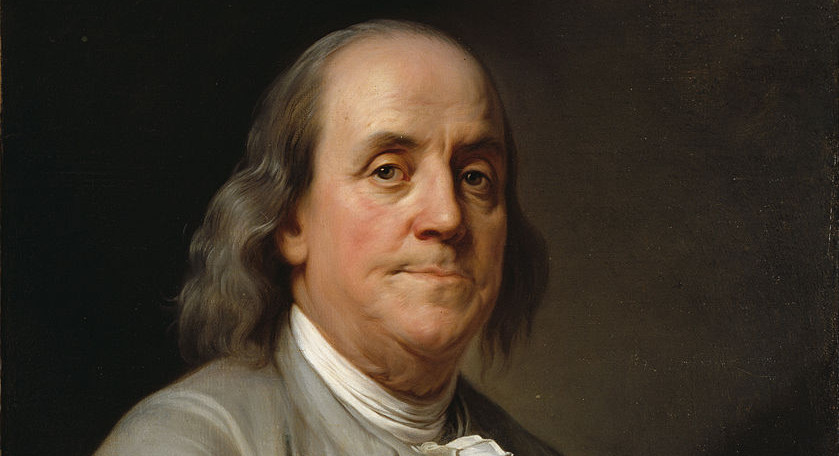
Questions put by Benjamin Franklin to his Junto, a club for mutual improvement that he founded in Philadelphia in 1727:
From Carl Van Doren’s biography. “New members had to stand up with their hands on their breasts and say they loved mankind in general and truth for truth’s sake. … In time the Junto had so many applications for membership it was at a loss to know how to limit itself to the twelve originally planned.”
_(25468705638).jpg)