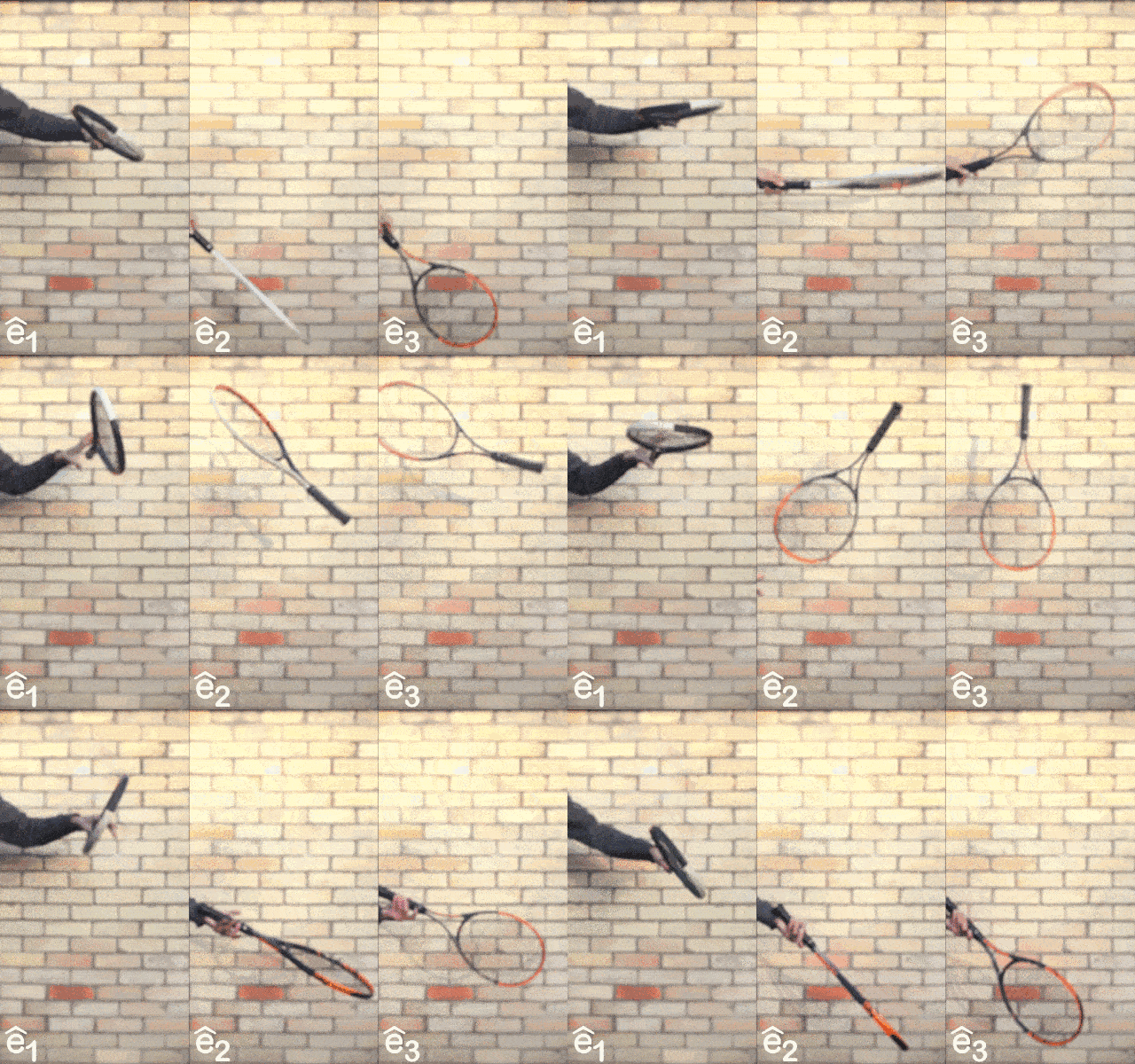
Experimenting in microgravity aboard the Mir space station in 1985, Soviet cosmonaut Vladimir Dzhanibekov watched a spinning wingnut flip spontaneously in midair. He was observing a phenomenon that had first been described mathematically by Louis Poinsot in 1834 — when a rigid body with three distinct principal moments of inertia is rotated around its intermediate axis, it can exhibit unpredictable 180-degree flips even in the absence of external torques.
This can be demonstrated easily with a tennis racket: When the racket is flipped around its first or third principal axis (the first and third images below), it doesn’t also undergo a half-rotation around another axis. But when it’s flipped around the intermediate axis (center image), it tends to contort itself so that it’s caught with the opposite face upward. (The racket in this demonstration is colored half white and half black to make this clearer.)