Second-Story Man

http://books.google.com/books?id=-1YEAAAAMBAJ

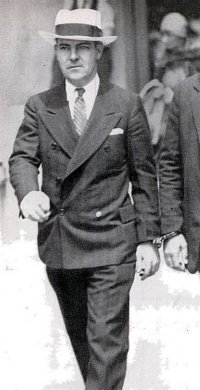
The world’s greatest jewel thief rarely carried a weapon and never indulged in violence, yet in the 1920s he managed to steal between $5 and $10 million from wealthy victims, whom he called “clients.”

Born in Massachusetts in 1896, Arthur Barry committed his first burglary at 15, creeping in through the window of a merchant’s home to plan the job and then returning to steal his receipts. The value of preparation struck him, and after a stint in the Army he went to New York and began his career in earnest. He would scan the society columns for a wedding party on Long Island, crash it wearing formal wear, then enter the house, wander upstairs, memorize the floor plan, and unlock windows. He’d return later to commit the robbery.

Working in this meticulous way he managed to steal half a million dollars a year in the mid-1920s, including $750,000 in jewels in broad daylight from the suite of F.W. Woolworth’s daughter. “Whoever took those pearls really knew what he was doing,” marveled a police captain at the time. “There were five ropes in the drawer, four imitations and the real one. The imitations were good enough to fool an oyster.”

Ironically, by the time Barry was finally caught and sent to prison in 1927, he had discovered that some of his victims were criminals themselves. “On the day after a job I’d read stories which listed all kinds of things I hadn’t stolen at all,” he told Life in 1956. “The clients would hide them and get the money from the insurance company. Sure, I was a thief and I’m sorry now, but you’ll find a lot of people in the Social Register who are also thieves and aren’t one bit sorry.”

Thorough

LONDON — Mrs. Kathleen Cameron, 19, was amazed at how hard and fast carpenters worked to tear down the pre-fab house next door at 10 Jardin Street.

‘I didn’t become suspicious of the four men until they skipped their tea break to continue working,’ she said.

Sure enough, the carpenters were thieves who stole the five-room house in its entirety. By the time police arrived, they were gone.

Lubbock Avalanche-Journal, Sept. 12, 1971

Earwitness

Mike and Tobye Madison of Baytown, Texas, had two odd experiences in January 1984: Their house was burglarized, and Baby, their exotic talking bird, began saying “Come here, Robert. Come here, Ronnie.”

“When the lady told me about it I almost broke up,” Baytown police detective Reggie Harper told the Associated Press. “I almost didn’t write it down.”

Apparently Baby, a female yellow-headed Amazon, was repeating the words of the intruders. This helped police identify two men and a 16-year-old boy and charge them with a series of house burglaries involving the loss of $50,000 in property.

Forty years earlier, the same thing had happened in New York.

Antique Spam

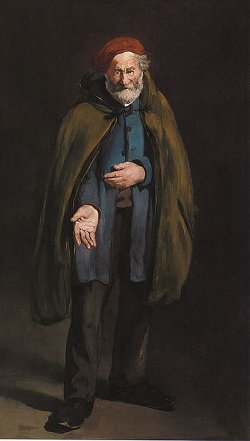
http://commons.wikimedia.org/wiki/File:Philosopher_with_Out-strechted_Hand.JPG

In July 1833 the Earl of Stamford and Harrington received a letter signed “Martha Turner.” “It is with shame, indescribable shame, I presume to address your Lordship with these lines,” she wrote, “but from having a knowledge of your Lordship’s person from my infancy, and through the report of your Lordship’s sympathising and benevolent character, I am about entrusting a most unfortunate affair to your Lordship’s honour and secrecy.”

She had left her widowed mother at Christmas, she said, with a man who had promised to marry her but had left her “ruined and undone.” She begged for “a small pecuniary assistance,” pleading with the earl to rescue her “from entire destruction” and “a miserable death.”

Martha Turner didn’t exist. Her appeal was contrived and arranged by Joseph Underwood, one of about 250 letter-writing impostors who plagued England’s wealthy in the 1830s. Underwood had invented and written Martha’s letter in a woman’s hand, and he forged corroborating messages from her supposed seducer and from a clergyman supporting her story.

Underwood earned nearly £1,000 a year at this, which apparently made his frequent incarcerations worthwhile. “If the faculty of creation be one of the principal attributes of genius,” wrote John Grant in 1838, “Underwood was a genius of the first magnitude. The force and felicity of his imaginative facts were remarkable. Had he turned his attention to novel-writing, instead of to the profession of a begging-letter impostor, there is no saying how high his name might at this moment have stood in the current literature of the country.” Underwood chose otherwise — he died in Coldbath Fields Prison in 1838.

Oops

A Mr. Smith was attacked at night, about a fortnight ago, in the neighbourhood of Hexam, by three men, who dragged him from his horse, and threw him on the ground face downwards. They made no attempt to rob him, nor did they utter a syllable. Mr. Smith also held his tongue until feeling the teeth of a saw enter into the flesh at the back of his neck, he exclaimed — ‘What are you doing with me?’ On hearing his voice, one of the men observed with an oath — ‘It is not him!’ And all three immediately departed. These barbarians had obviously been upon the look-out for some object of revenge, whom they had intended to destroy by means of the instrument we have mentioned.

The Times, Dec. 19, 1821

Rules are Rules

Indiana had a sumptuary law prohibiting the smoking of cigarettes, and a showman was exhibiting a trick chimpanzee in a country town in the vicinity of South Bend. One of the tricks of this animal was to smoke a cigarette, for which he was arrested and brought before a justice of the peace. His keeper pleaded that the animal did not know that he was violating the law, but the justice solemnly replied that ignorance of the law excuses no one, and the chimpanzee was fined five dollars which his keeper paid.

American Law Review, January-February 1920

Presto

http://commons.wikimedia.org/wiki/File:SS_Ferret.jpg

In 1880 a man calling himself Smith opened an office and a bank account in London and purchased stationery reading “Henderson & Co., Ship Brokers.” Later that year another man approached a Glasgow chandler to order a large quantity of stores — he explained that Smith had chartered the steamer Ferret for a Mediterranean cruise. Henderson & Co. and the bank vouched for Smith, so the chandler filled the order.

The ship steamed to Cardiff, where it picked up Smith and a crew of strangers. On Nov. 11 it sailed through the Strait of Gilbraltar, showing its number, and then vanished. When some of the ship’s casks were found floating in the Mediterranean, the underwriters paid for a total loss.

A water policeman in Queenscliff, Australia, happened to be reading about this in a Glasgow newspaper on April 19 when he noticed the arrival of a steamer strangely similar to the Ferret. The India‘s hull was black, its boats white, and its funnel red, but the resemblance was otherwise striking. He notified the authorities, who seized the ship, where they noted that the Ferret‘s official numbers had been chipped off the hatch.

The ensuing investigation showed that after passing Gibraltar, the criminals had repainted the steamer, tossed the casks overboard, covered their lights and stole back through the strait, whence they had made for Cape Town and then for Australia.

Two of the pirates served seven years’ hard labor and the third three and a half years. “But for the copy of the Scotch paper falling into the hands of the Queenscliff policeman,” recalled The Age in 1930, “the identity of the vessel would probably never have been discovered.”

Public Relations

When Jesse James’ gang robbed a Missouri train in 1874, they left this note with the conductor:

THE MOST DARING ON RECORD!

The south bound train on the Iron Mountain Railroad was robbed here this evening by five heavily armed men, and robbed of —– dollars. The robbers arrived at the station a few minutes before the arrival of the train, and arrested the station agent and put him under guard, then threw the train on the switch. The robbers were all large men, none of them under six feet tall. They were all masked, and started in a southerly direction after they had robbed the train. They were all mounted on fine blooded horses. There is a h— of an excitement in this part of the country.

Understandably, it was false in one particular — they rode west.

Art Theft

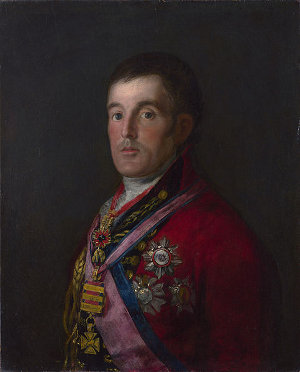
http://commons.wikimedia.org/wiki/File:Duke_of_Wellington_2.jpg

This is Francisco Goya’s painting Portrait of the Duke of Wellington.

In 1961 it was stolen from the National Gallery in London.

In 1962 it turned up again — it hangs in Dr. No’s lair in the first James Bond film.

The Spider Man of Moncrieff Place

On Oct. 17, 1941, 73-year-old Philip Peters was found bludgeoned to death in the kitchen of his Denver home. All the doors and windows were locked. His wife, who had been away at the time, returned to the home with a housekeeper, and both heard strange sounds throughout the ensuing weeks. Finally both moved out.

Police were checking on the vacant house the following July when they heard a noise on the second floor. An officer ran upstairs in time to see a man’s legs disappearing through a small trapdoor in the ceiling of a closet.

The trapdoor led to a narrow attic cubbyhole in which 59-year-old Theodore Coneys had been living for 10 months. He had broken into the house the previous September and had been living silently in the attic for a month when Peters discovered him one night at the refrigerator. After the murder he’d returned to the cubbyhole and had remained there ever since.

He confessed to the crime and was sentenced to life in prison.