
This is interesting — in 1904 the Strand sent a musician to Parliament to record the pitch and rhythm of the speakers’ voices on a musical staff. Some examples:
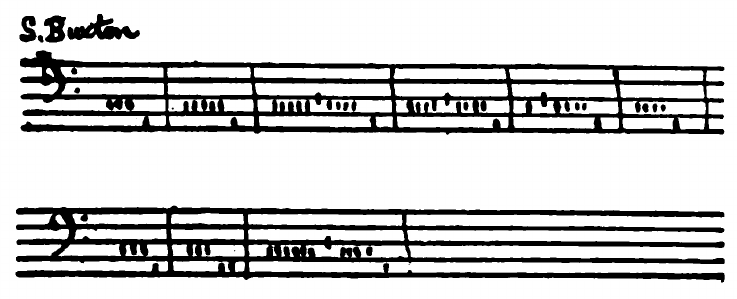
Sydney Buxton “speaks often and briefly, but into a short space of time he can cram a wonderful lot of words, being one of the most rapid speakers in the House. The dominant note is about C sharp, and the modulation seldom varies in character, the speech being broken up into short phrases, with a downward inflection at the end of each.”
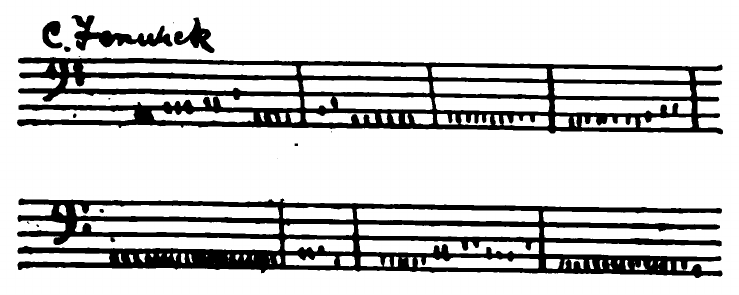
Charles Fenwick “may lay claim to the lowest pitch. His strong, vigorous, ringing style is a good index to the character which has raised its owner from work in the collieries to a seat in Parliament.”
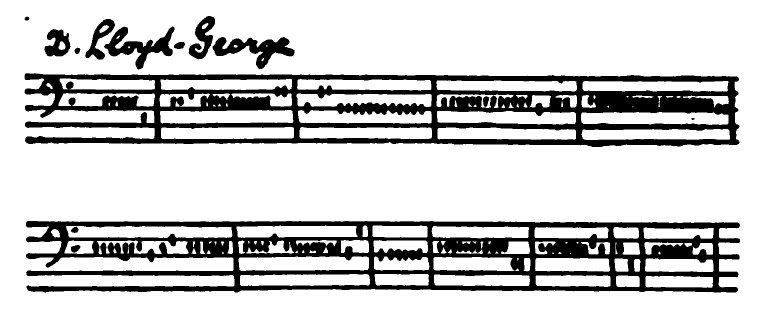
David Lloyd George “possesses a flexible voice of light, clear, and pleasant quality. … When in a practical mood he gets along on D and E, but at other times he bridges a considerable interval.”
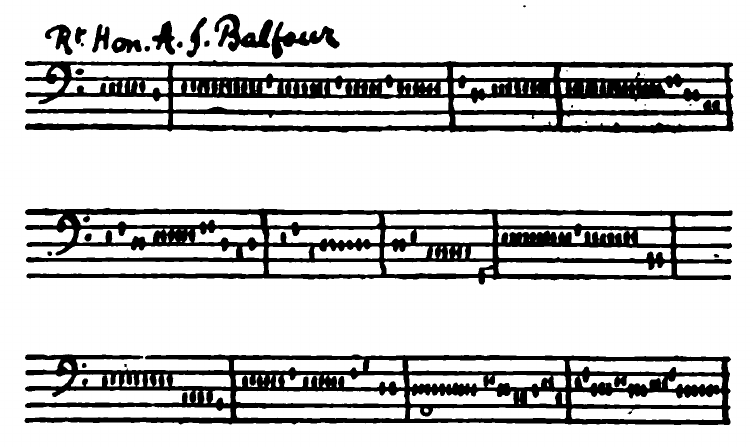
Prime Minister Arthur Balfour’s voice “has that undefinable something in its timbre which one listens for in a first-class baritone’s singing. … The note on which he does most speaking is somewhere between D and E, but he frequently ranges the octave from G to G.”