
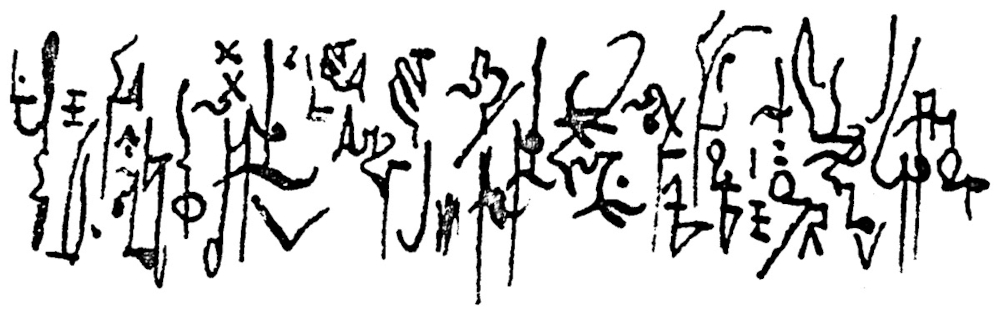
From 1906 to his death in 1922, Hungarian novelist Géza Gárdonyi kept a secret journal in a script so inscrutable that it wasn’t deciphered until 1965. He’d labeled the work a Tibetan grammar, but in fact it employed a calligraphic code founded in Hungarian using symbols that Gárdonyi had devised himself. In it he recorded his thoughts, observations, and literary plans. It was published in 1974 as Titkosnapló (“secret diary”).